
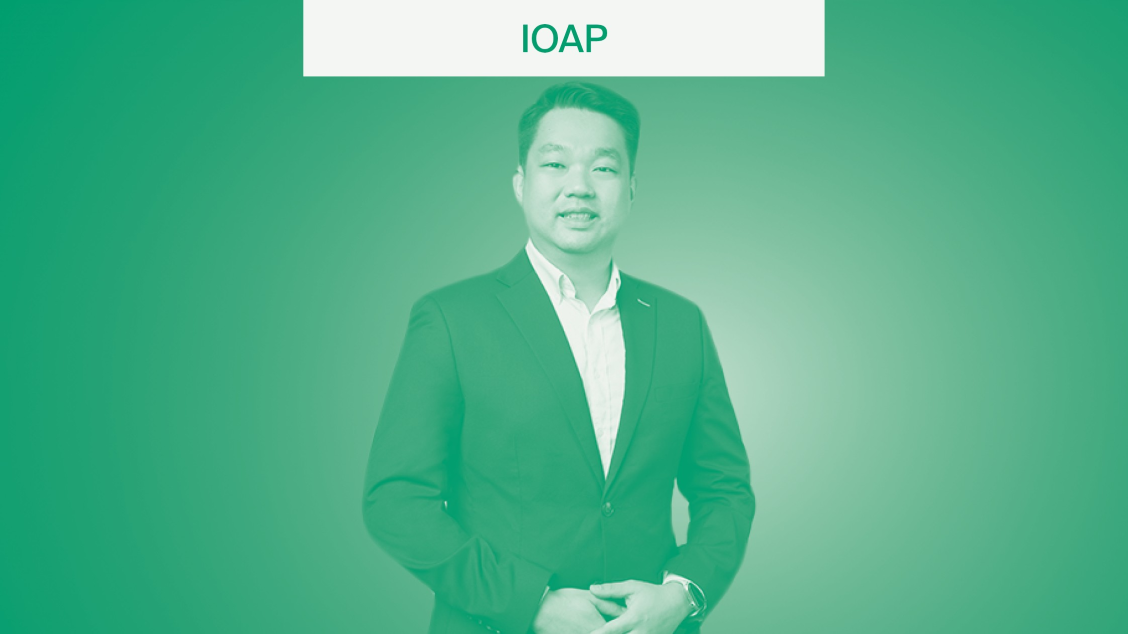
MDPI’s Institutional Partnerships Manager Dr Wei Thye Lee on IOAP and Tackling Misconceptions
The Institutional Open Access Program (IOAP) is MDPI’s collaborative framework designed to support universities, researchers, and consortia in advancing open science through institutional partnerships.
Through the program, MDPI partners with over 1000 institutions worldwide. Partnerships gain access to a dedicated institutional dashboard and discounts on Article Processing Charges (APCs) for affiliated authors. To learn more, read our article IOAP Explained.
In this article, we discuss how IOAP managers tackle common misconceptions regarding the transition to Open Access publishing.
Who is Dr Wei Thye Lee?
Dr Wei Thye Lee joined MDPI in February 2023 as an Assistant Editor and was later appointed as a Publishing Specialist for the company.
He now serves as the Institutional Partnerships Manager for the Asia Pacific (APAC) and Middle East and North Africa (MENA) regions. His role involves supporting institutions to explore the most efficient ways to help their researchers publish Open Access.
Which achievements of the Institutional Partnerships team are you most proud of this year?
The ZB MED consortium deal was a major success, with over 100 German universities partnering with MDPI through the IOAP. Although I was not directly involved in the negotiations, the success of the deal was an inspiration to my team and me.
I hope that one day we will be able to strike a similar consortium agreement in the APAC & MENA regions.
As the IOAP Manager for the APAC & MENA regions, what are some of the misconceptions regarding OA in these areas?
Raising awareness of the benefits of Open Access as a form of research communication remains a challenge. Research from countries with a strong global presence must be accessible to research communities in countries with fewer resources.
This accessibility can help address critical issues without imposing additional barriers to knowledge exchange, such as subscription costs.
How can the Institutional Open Access Program help countries tackle these misconceptions?
The IOAP provides institutions and researchers with discounts on APCs to help them publish their work in an OA format. The program offers discounts to all affiliated authors from participating institutions and has flexible workflows tailored to the institution’s individual needs.
There are no barriers to accessing research that is published Open Access, and it is available to everyone.
What is the most challenging part of your role as an Institutional Partnerships manager?
The most challenging part of my role has been addressing the misconceptions from scholars regarding OA publishing. This has been particularly evident in face-to-face discussions, including conferences and scientific workshops.
There have been times when I have had to explain to researchers that most types of publishing are not free, and subscription costs are not always transparent. Authors publishing in OA are made more aware of the costs and have the additional benefit of their work being shared more widely.
Researchers often complain about the high APC costs involved in OA publishing, but shy away from discussions surrounding the quality, availability, and dissemination of high-quality OA publications.
Are there any recent exciting updates from the IOAP team?
Two new universities have recently joined the program, including the University of Queensland and Macquarie University. These are two of the top universities in Australia, and MDPI will continue to support the publication of their research in fully OA journals.
MDPI empowers institutions to embrace open science
The Institutional Open Access Program (IOAP) aims to streamline workflows and reduce administrative costs. It helps institutions comply with Plan S and national OA mandates while making it easier for researchers to publish in MDPI’s fully Open Access journals.
By fostering these partnerships, the IOAP strengthens global research visibility and supports a sustainable transition toward an open science future.
Click here to see the IOAP website if you would like to learn more about how your institution can join the program.