


MDPI Articles Cited in the News: September 2026
This month’s Cited in the News roundup features a selection of impactful research published in MDPI’s Open Access journals that have attracted attention from media outlets around the world, including Smithsonian Magazine, The Washington Post and Phys.org.
The studies explore a range of topics including:
- Climate change and the impact of heatwaves on human life and health.
- How the events of the World Trade Centre are still impacting survivors’ health today.
- Drones and how more action needs to be taken to understand their implications on wildlife.
- How classroom assessments are impacting students’ mental health and what can be changed to improve their wellbeing.
As research increasingly shapes public understanding of the world, accurate reporting of scientific discoveries has never been more important. At MDPI, we are committed to making cutting-edge research freely accessible through Open Access publishing, helping ensure that high-quality science reaches researchers, journalists, policymakers, and the wider public.
Accuracy of Heart Rate Measurement Under Transient States: A Validation Study of Wearables for Real-Life Monitoring
Published in Sensors | Mentioned in Smithsonian Magazine
As the summer season draws to a close, it’s clear to see that climate change is driving serious changes to our climate and ecosystems. In 2026, the summer months were the warmest on record for many countries, including the US, UK and Western Europe. As global temperatures continue to rise, it’s important to adapt to the changing climates. This is especially important for those who are exposed to the sun for long periods of time as part of their jobs, including: outdoor and manual workers, athletes, and civil protection employees. Heatwaves can seriously impact health as they can cause dehydration and exacerbate cardiovascular and respiratory conditions.
An article published in the Open Access journal Sensors and referenced by Smithsonian Magazine analyses invasive reference methods and representative non-invasive approaches available to measure core body temperature (CBT), from infrared ear sensors to ingestible telemetric sensors.
This sensor technology is important for providing fast and accurate CBT in real-world scenarios. Moreover, it can also be used to plan and provide solutions for situations where heat is a danger to health. The authors review important elements of each approach, including measurement principles, accuracy, invasiveness, usability, and application domains. Additionally, they evaluate device feasibility in real-world scenarios.
The researchers conclude that it’s crucial to understand what devices are currently available for future researchers to select or develop new, quick, and convenient approaches to accurately measure CBT under real-world conditions.
Evolving Cancer Characteristics Among World Trade Center Survivors: An Updated Analysis from the WTC Environmental Health Center
Published in IJERPH | Mentioned in The Washington Post
2026 marks 25 years since the World Trade Centre disaster, which took the lives of 2977 people. It’s an event that will never be forgotten, and we are still feeling the impact of it to this day. This is especially true for survivors of the attack who are not only psychologically affected but also face physical challenges too.
Survivors of the attack are still dealing with the aftermath of being exposed to a range of carcinogens and compounds hazardous to health, from exposure to smoke, dust and debris. The community exposed to this hazardous cocktail includes local residents, workers and students in the disaster zone area. Because of this, it’s important to continue to support and monitor the health of survivors. The WTC Health Program provides high-quality, compassionate health care for survivors; this includes health monitoring and treatment for WTC-related conditions.
A recent study in the Open Access International Journal of Environmental Research and Public Health (IJERPH) and referenced by the Washington Post, provides an updated description of cancers in the WTC Environmental Health Center (EHC). The researchers summarised demographics, exposure history and tumour characteristics among 7274 enrolees with pathologically confirmed primary cancers meeting WTC Health Program certification criteria.
The researchers identified that since their previous report in 2020, the number of enrolled cancers has more than doubled. They conclude that these findings show a need for more support for consistent surveillance and additional epidemiologic studies to improve cancer prevention and survivorship in this uniquely exposed population.
A Factors–Responses–Consequences Framework for Assessing Wildlife Impacts of Uncrewed Aerial Systems: A Systematic Review
Published in Drones| Mentioned in Phys.org
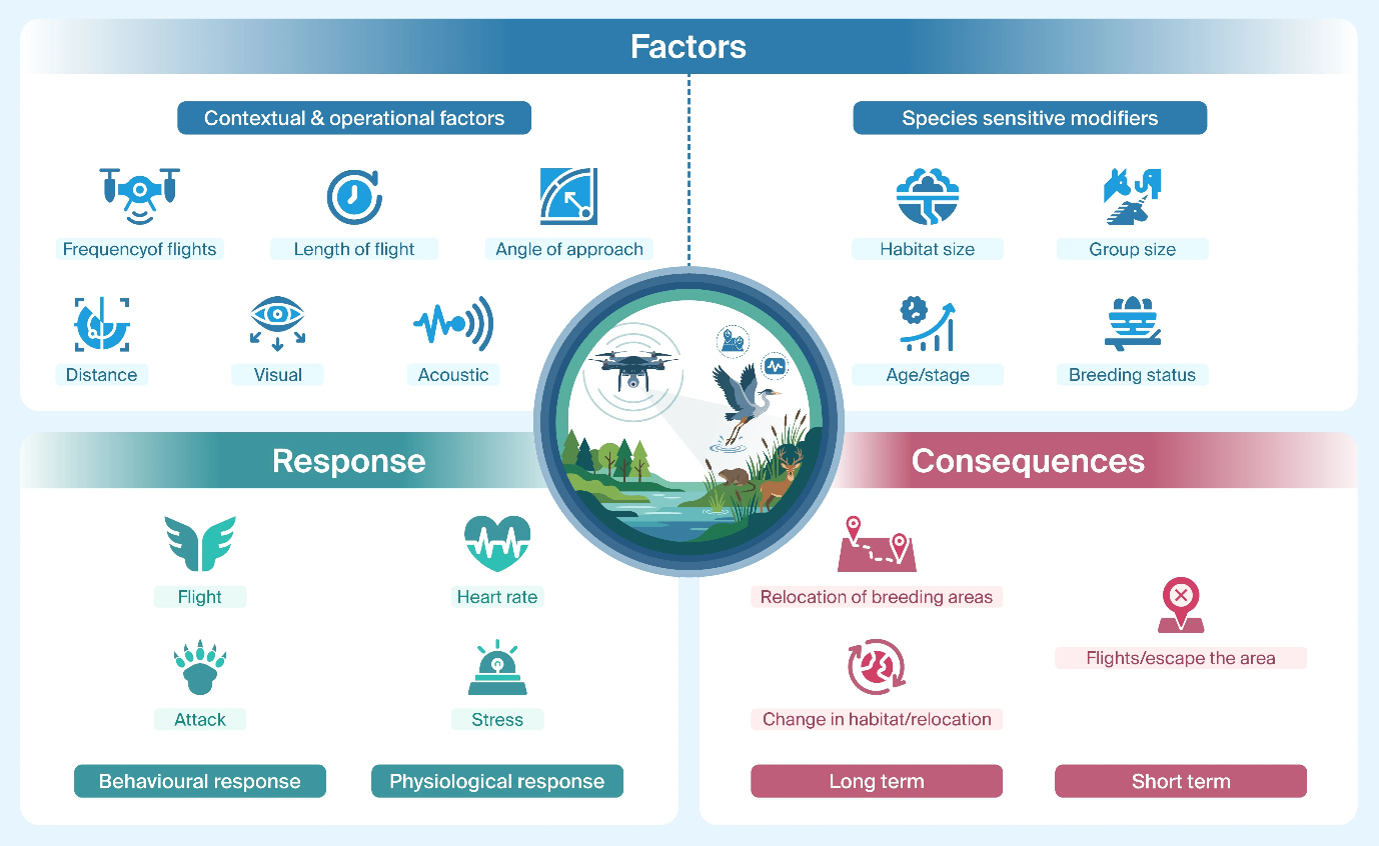
Uncrewed Aerial Systems (UASs) or drones, are extremely versatile and are becoming an indispensable form of technology. Their uses span a wide range of industries, including emergency services, military, environmental monitoring, precision agriculture, forestry and infrastructure inspection. However, as their usage also becomes popular in the public domain, they are starting to create problems. Public use of drones includes photography and videography, which can seem invasive. While drone users must adhere to rules implemented by national aviation authorities worldwide, some feel these rules do not go far enough, and many people have become annoyed with the number of drones in operation. Further, drones can be noisy and intimidating, which can cause distress to animals and affect certain behaviours.
A recent systematic review, published in the Open Access journal Drones and referenced by Phys.org, explores the disturbances caused by UASs to wildlife. The authors used a PRISMA-guided systematic review to analyse 39 studies which involved birds, mammals and marine taxa to identify UAS operational drivers of disturbance. This included applying a Factors–Responses–Consequences (F–R–C) framework to link UAS operational characteristics, observed wildlife responses and ecological consequences.
The authors concluded that the FRC framework was successful in translating ecological knowledge into data that can be utilised directly by engineers when developing algorithms and simulation technology for drone use. This will allow ecological parameters to be taken into account and designed around to improve animal-drone relationships.
Satisfaction and Frustration of Basic Psychological Needs in Classroom Assessment
Published in Trends in Higher Education | Mentioned in The Conservation
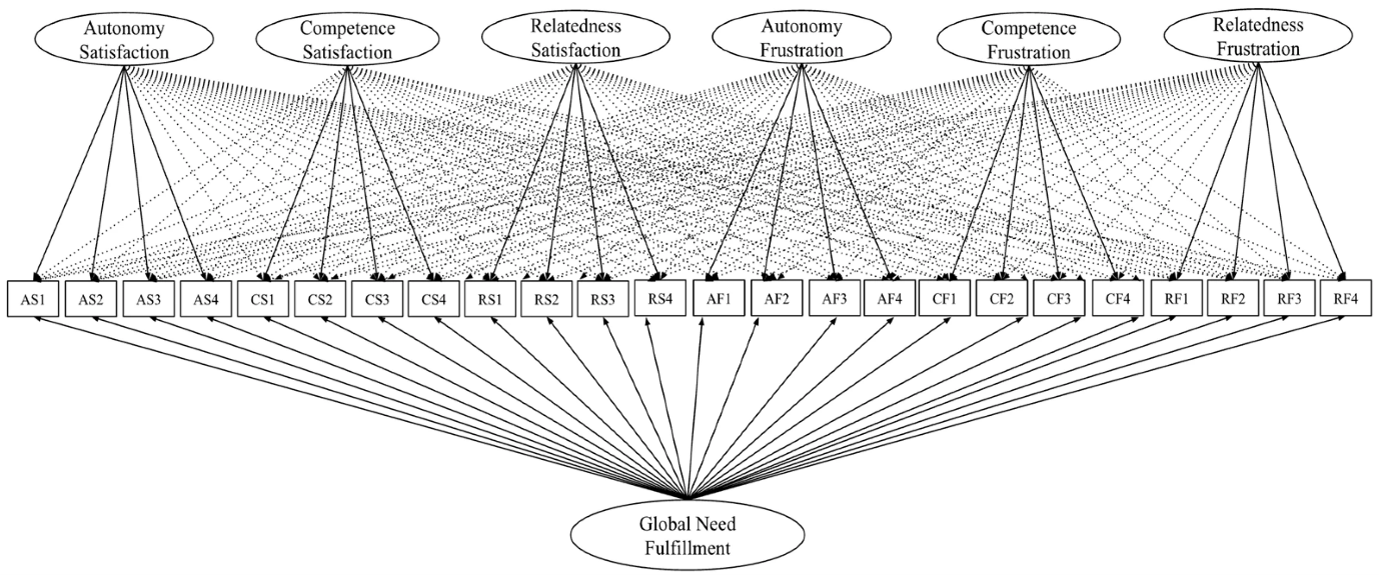
Figure 4: Basic Psychological Need Satisfaction and Frustration Scale for Classroom Assessment.
Student life can be extremely chaotic, constantly shifting from periods of intense study to socialising with friends, which often leads to alcohol consumption and late nights. As well as balancing student loans and handling academic pressures. All of this tumultuous activity can take a toll on physical and mental health, especially during periods of stress such as examinations and assessments. Classroom assessments are a consistent source of social pressure and unhappiness for students. However, they are an integral feature of post-secondary education, shaping students’ grades, progression, and self-perceptions of competence. Despite this, many students often refer to these assessments as the opposite; they find them stressful, controlling, and undermining of their well-being.
A recent article, published in the Open Access journal Trends in Higher Education and referenced in The Conversation, conducted three studies to investigate whether multiple-choice examinations could be redesigned to combat this stress. The authors aimed to satisfy basic psychological needs (BPNs) and support well-being by developing a scale to measure satisfaction and frustration (BPNSF-CA). Moreover, the researchers redesigned multiple-choice assessments to include four need-supportive features, including providing a test blueprint, grouping items according to the blueprint, and supportive messages at the beginning and end of the assessment as well as a section for feedback. Additionally, they tested this assessment in an authentic classroom setting.
The researchers concluded that the BPNSF-CA scale was effective for measuring student well-being. Additionally, they also noted that the addition of the four need-supportive features to classroom assessments improved students’ performance and the extent to which their basic psychological needs were supported.
Browse the full journal list to access more diverse, Open Access research published by MDPI.