
Insights into MDPI Top Picks: September 2026
September has seen a range of exciting research published across MDPI’s Open Access journals.
In this roundup, we showcase an essay from Massachusetts Institute of Technology (MIT), exploring how art history can offer new perspectives on our relationship with the environment. We also examine how the implementation of online delivery can affect a restaurant, and how music-based peer support could help women experiencing psychological distress. Finally, we cover research behind a patented formulation of fermented kelp that could help reduce hair loss and improve hair and scalp health.
Art History and Ecology: A Drama in Three Acts
Published in Arts, September 2026 | Department of Architecture, Massachusetts Institute of Technology (MIT)
Art and ecology may seem like separate fields, but they are connected through how people understand and interact with the natural world. A new essay explores this relationship through three stages in the development of ecological art history.
The first stage, “ecological as unthinking,” examines how human desires have driven the extraction of natural resources. Pigments and luxury dyes used in art also became sought-after commodities, with materials such as ultramarine from lapis lazuli gaining cultural and economic value through its long-distance trade and scarcity.
The second, “ecological as experiential,” explores how people began to think about what it means to physically experience their environment. Artists increasingly used landscapes, cities and natural environments to explore how people encounter the world through their bodies and senses. For example, Paul Cézanne’s The Quarry at Bibémus depicts jagged cliffs not far from the artists home, highlighting the shift into how a landscape can be something we observe but also experience.

Paul Cézanne, The Quarry at Bibémus, ca. 1895–1900: Artists have long depicted and celebrated landscapes, but our relationship with nature goes beyond simply appreciating what we see. Art can also reveal how we experience, interact with and depend on the environments around us.
Finally, “ecological as relational/sensory,” considers how humans are not separate from ecological systems but are part of them. Art can therefore explore the connections between humans, other organisms and the environments they share, using senses beyond vision to understand these relationships. Gilberto Esparza’s Plantas autofotosinthéticas uses microbes to process human sewage and generate electricity, creating a system that connects human waste with microbial life, plants and energy production.
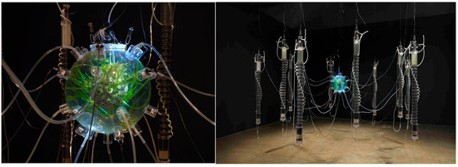
Gilberto Esparza’s Plantas autofotosinthéticas (2013-2014): The work shows how art can help us experience ecological processes through more than just sight.
Together, these stages show how art history can offer a different perspective on our relationship with the environment, moving from taking from nature, to experiencing it, to recognising that we are part of it.
Restaurants’ Optimal Pricing Decisions Under Heterogeneous Network Effects in Omnichannel Service Systems
Published in Mathematics, September 2026 | School of Management, Zhejiang University of Technology
Online food delivery has changed how restaurants reach customers, allowing businesses to offer both traditional dine-in services and delivery. However, adding a delivery option can increase competition and place greater pressure on shared resources such as kitchen staff and equipment. This study examines when restaurants can benefit from implementing an omnichannel approach.

Advancements in mobile technologies alongside challenges faced by restaurants during the COVID-19 pandemic, which restricted in-store dining, has remarkably grown online delivery services.
Researchers in China developed game-theoretic models to examine how restaurants and consumers respond when dine-in and delivery services operate alongside each other. The models considered two types of network externality: how customers using the same channel (e.g. dining in) affect one another and how dine-in and delivery customers affect each other when sharing restaurant resources.
For a single restaurant, introducing delivery can increase profits by expanding its customer base and allowing prices across both channels to be better coordinated. However, these benefits depend on delivery not creating excessive congestion that reduces service quality.
The researchers then examined competition between restaurants. When two dine-in restaurants compete, introducing delivery can expand the market while intensifying cross-channel competition. The restaurant introducing delivery generally benefits, although the size of this benefit depends on how strongly dine-in customers affect one another. When this effect is intermediate, increased competition can reduce the gains from introducing delivery.
The study also considered competition between a dine-in restaurant and an online-only rival. Here, introducing delivery generally benefited the restaurant, with the greatest gains occurring when the effects of shared resources between dine-in and delivery customers were intermediate.
Overall, the findings show that introducing delivery does not provide the same benefits in every situation. Its success depends on competition, customer interactions, and how much demand places pressure on shared restaurant resources.
Feasibility and User Experience of a Lyric Analysis Peer Support Intervention (LAPSI) for Psychological Distress Among South African Women
Published in Women, September 2026 | Department of Social Sciences, Faculty of Law, Humanities and Social Sciences, iYunivesithi Walter Sisulu
Psychological distress typically manifests through depressive and anxiety-related symptoms and is increasingly recognised as a global public health concern. Women experience a disproportionate burden of psychological distress which is further exacerbated in low- and middle-income countries.

Gendered social roles, economic inequalities, and restricted access to health and social care systems can heighten women’s vulnerability to psychological distress.
In South Africa the prevalence of psychological distress is substantially higher among females (26.3%) than among males (17.8%). Major barriers to women’s utilisation of mental health services in South Africa include:
- Fear of stigmatisation and negative evaluation.
- Concerns regarding confidentiality.
- Physical barriers such as limited access to transportation.
- Mistrust of healthcare systems.
These factors can amplify the distress experienced by women as they don’t feel comfortable articulating their experiences or seeking appropriate forms of psychosocial support. Therefore, there is an increased recognition for the need of community-based, gender-specific interventions that prioritise safety and foster confidence in mental health care.
Researchers in South Africa explored an intervention called LAPSI (Lyrical Analysis Peer Support Intervention) which brings women together in peer-support groups where they discuss song lyrics as a way of expressing emotions and reflecting on their experiences.
The group interviewed 29 women to understand the practicality, accessibility, and engagement in the programme.
Overall, the study found that participants perceived LAPSI as accessible and subjectively meaningful. As Lucas Banda, lead author of the study, states:
Women described LAPSI as a safe and supportive space that enabled emotional expression, reflection, and connection through shared experiences. The use of culturally relevant song lyrics helped participants discuss sensitive issues such as stigma, relationships, health concerns, and everyday stressors in ways that felt accessible and meaningful.
Our findings suggest that LAPSI is a feasible and acceptable intervention with potential to complement existing community-based and HIV-related mental health services, particularly in resource-constrained settings where innovative and culturally responsive approaches to psychosocial support are needed.
With positive self-reported experiences, this work provides evidence that interventions such as LAPSI warrant consideration for further investigation as components of community-based mental health support for women experiencing psychological distress.
Enhanced Anti-Hair Loss Activity of Kelp (Laminaria japonica) Induced by Fermentation Using Saccharomyces cerevisiae
Published in Cosmetics, September 2026 | Suncheon Research Center for Bio Health Care
By the age of 35, approximately 40% of men experience significant hair loss, which can affect emotional and mental well-being. One contributing factor is oxidative stress, which occurs when reactive oxygen species (ROS) accumulate in hair follicle cells. Regulating oxidative stress, inflammation, and apoptosis may help preserve hair follicle function, but existing treatments can cause adverse effects with long-term use. This has increased interest in naturally derived alternatives.
Laminaria japonica (kelp) is an edible brown seaweed widely used in the food, pharmaceutical and cosmetic industries. However, its processing generates by-products containing potentially valuable antioxidant and anti-inflammatory compounds. Microbial fermentation can help convert these by-products into useful more useful compounds. Previous research has shown that fermenting kelp with Saccharomyces cerevisiae can enhance its anti-inflammatory activity.
Researchers in Korea investigated whether fermented kelp could help protect against hair loss. They assessed its antioxidant activity and its effects on metabolic pathways before developing a shampoo containing fermented kelp culture for human testing.
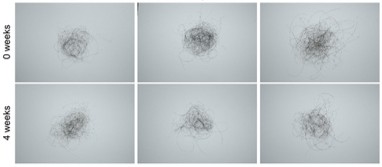
Application of the kelp fermented shampoo was shown to reduce the number of shed hairs collected during a hair wash on the study’s participants.
Overall, the formulation showed promising effects on hair and scalp health. The authors have also filed a patent for the fermented kelp culture broth as a potential treatment for hair loss.
MDPI’s commitment to impactful Open Access research
Research has the potential to influence scientific innovation and inform policies that address global challenges. By supporting researchers and making their work accessible, Open Access publishing can help broaden the reach and impact of important scientific findings.
Discover more research, advances in Open Access publishing, and insights into MDPI’s contribution to scientific research on the MDPI blog here.
If you would like to keep reading, see the full list of MDPI Journals where you can discover the latest science, from discussions on the perception of ecology through art history, to advances in natural product cosmetics, mental health support, and more.