


International Journal of Molecular Sciences MDPI: Journal Spotlight
This edition of our Journal Spotlight will be looking at the achievements and growth of the International Journal of Molecular Sciences (ISSN 1422-0067). The International Journal of Molecular Sciences (IJMS) is an international, peer-reviewed Open Access journal that provides an advanced forum for research related to molecular studies in biology and chemistry, with a strong emphasis on molecular biology and medicine. Editor-in-Chief: Prof. Dr. José L. Quiles Current Impact Factor: 5.6 Current CiteScore: 10.0 Statistics as of September 2026.
An IJMS MDPI timeline
- 2000 – Inaugural issue was released
- 2004 – IJMS was indexed in SCIE (Web of Science)
- 2017 – IJMS held its first physical meeting at the 2nd International Symposium of Frontiers in Molecular Science
- 2019 – IJMS became affiliated with multiple societies:
- 2025 – IJMS published its 100,000th paper
- 2026 – IJMS received its 2025 Impact Factor (5.6) and CiteScore (10.0)
Editor-in-Chief
Prof. Dr. José L. Quiles has been the Editor-in-Chief of IJMS since 2026, taking over from Prof. Dr. Maurizio Battino who held the position from 2017 until this year. He is a professor at the University of Granada, Spain. As a “Highly Cited Researcher” (Clarivate), his published work has received more than 19,000 citations, and his research focusses on aging and associated diseases in relation to the role of diet, redox biology and mitochondria.  Prof. Dr. José L. Quiles has an M.Sc in Nutrition and a Ph.D in Biological Sciences from the University of Granada, Spain. He is involved in a number of editorial roles across MDPI journals, including Diseases, Molecules and Nutrients.
Aims & scope
The journal’s first ever editorial piece, a message from its first EiC Prof. Dr. Jerzy Leszczynski in January 2000, states the early intention for IJMS:
[The journal] blends together traditional areas of chemistry, biology, and physics, and facilitates the exchange of information and dialog among researchers in these fields.
26 years later and the goal of IJMS has stayed relatively similar, with an emphasis now placed on molecular studies in biology and chemistry, and to educate and inspire the scientific community worldwide. With molecules as the main focus, the journal’s scope includes:
- Fundamental theoretical problems of broad interest in biology, chemistry and medicine
- Breakthrough experimental technical progress of broad interest in biology, chemistry and medicine
- Application of the theories and novel technologies to specific experimental studies and calculations
A full list of topics in the journal’s scope can be found here.
Journal metrics
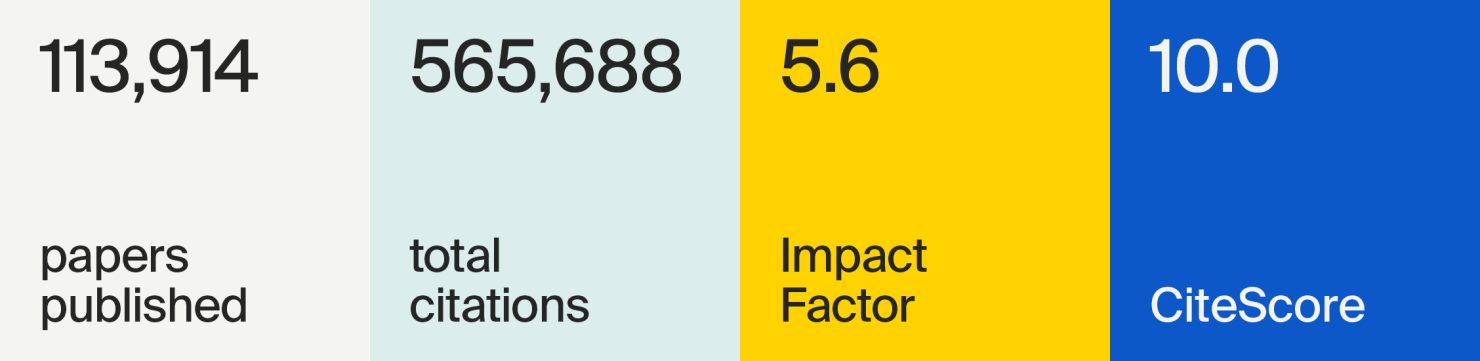
Most cited and viewed
The most cited paper published in IJMS, as of September 2026, is titled: “The NLRP3 Inflammasome: An Overview of Mechanisms of Activation and Regulation”, which looks at the understanding of the mechanisms of NLRP3 inflammasome activation by multiple signalling events, and its regulation by post-translational modifications and interacting partners. The journal’s most viewed and downloaded paper of all time is: “Pathophysiology of Type 2 Diabetes Mellitus”. This review analyses the key aspects of Type 2 Diabetes Mellitus, as well as the molecular mechanisms and pathways implicated in insulin metabolism leading to Type 2 Diabetes and insulin resistance.
Impact Factor
IJMS currently holds an Impact Factor of 5.6 and is positioned in Q1 for the “Biochemistry and Molecular Biology” Journal Citation Report (JCR) category and Q2 for the “Chemistry, Multidisciplinary” JCR category. 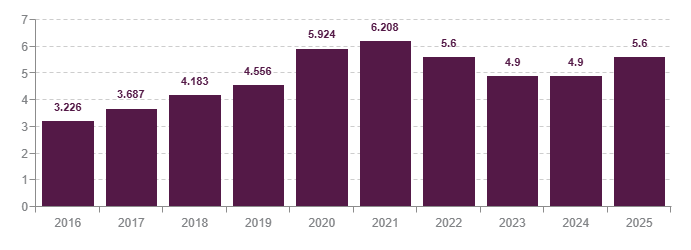
CiteScore
The journal’s CiteScore sits at 10.0 as of 2026. IJMS is positioned in Q1 for several CiteScore categories, including “Inorganic Chemistry”, “Organic Chemistry” and “Molecular Biology”. 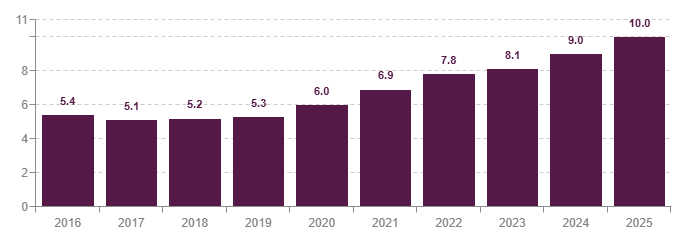
Indexing
IJMS is indexed within a large range of databases and archives, including:
- BibCnrs
- CNPIEC
- Dimensions
- FSTA
- MEDLINE (National Library of Medicine)
- OSTI
- ProQuest
- PubMed
- SCIE (Web of Science)
- Scopus (Elsevier)
Access the complete list of associated indexing services here.
Altmetrics
As of September 2026, IJMS has received 1,145 mentions across policy documents, 24,043 mentions in patents, and 37,409 mentions across various news outlets and blogs.
The IJMS community
As with all MDPI journals, IJMS is enthusiastic about fostering positive relationships with the academic community. It does this through various initiatives, including conferences, awards and affiliations.
Conferences
Conferences present a valuable opportunity to connect with the wider academic community. IJMS engages with a wide range of conferences hosted by MDPI. IJMS will be hosting the ‘Building Reproductive Futures: Advances in Oncofertility and Uterine Receptivity’ webinar on 15 September 2026. The online event will consist of two expert talks that span key stages of the reproductive journey, ranging from preserving fertility before or during cancer treatment to optimising the uterine environment for successful implantation and pregnancy.  IJMS will also be hosting the 6th International Symposium on Frontiers in Molecular Science from 14 to 17 September 2027. Taking place in Barcelona, Spain, the conference will gather leading experts and researchers from the field to share their insights across trends in biochemistry and molecular biology.
  Register for and see more information regarding upcoming events related to IJMS .
Awards
IJMS regularly offers various awards to researchers in the field. Currently, the journal is accepting applications for its Travel Award until 31 October 2026 to encourage junior scientists to present their research at relevant academic conferences – the winner will be announced 31 December 2026. The journal also offers the following awards annually:
- Young Investigator Award – nominations open until 31 December 2026
- Outstanding Review Award – winners to be announced 31 January 2027
- Best Paper Awards – winners to be announced 30 June 2027
Click here to learn more about the journal’s awards.
Affiliations
IJMS is pleased to be affiliated with numerous societies:
- The Biomedical Research Centre (CIBM) – founded with the aim of advancing the knowledge and development of the biomedical field through quality research.
- British Neuro-Oncology Society (BNOS) – aiming to promote high-quality multi-disciplinary research, education and patient-centred care.
- Epigenetics Society (ES) – founded to promote research on all aspects of epigenetics.
- European Chitin Society (EUCHIS) – a nonprofit organisation that aims, amongst other things, to act as a central organisation for the standardisation of matters relating to chitin.
- Italian Society of Food Sciences (SISA) – bring together experts and scholars of various food sciences to study emerging themes and promote correct public information.
- Spanish Society for Cell Biology (SEBC) – aiming to promote and foster the field of cell biology in Spain.
Members of the above societies should contact their society representatives to learn more about the benefits of publishing with MDPI, such as discounts on article processing charges (APCs). Learn more about the journal’s affiliations here.
Testimonials
“I have an excellent opinion of MDPI. Having previously co-authored works with them, submitting my latest paper as a corresponding author and a special guest editor for a special issue enabled me to grow professionally, including on an editorial level, with support from other MDPI academic editors.” – Dr. Annamaria Piscazzi, Author “Publishing with MDPI has been an exemplary experience from start to finish. The editorial workflow is remarkably efficient, the peer review process is both rigorous and constructive, and the platform offers complete transparency at every stage. What truly sets MDPI apart is the professionalism and responsiveness of the editorial team ensuring that scientific integrity is never compromised, while also supporting authors in enhancing the quality of their work. Our recent manuscript benefited immensely from thoughtful reviewer input and a streamlined revision process, all of which contributed to an outstanding final publication. MDPI has set a new benchmark in open-access publishing, and I would strongly recommend it to colleagues seeking both visibility and academic rigor in dissemination.” – Dr. Yajnvalka Banerjee, Author
Submitting a manuscript
Manuscripts for IJMS should be submitted online at susy.mdpi.com. Prior to submitting, we recommend that authors explore the useful resources on our instructions for authors webpage. To submit your manuscript, register and login to the submission website. Once you have registered, click here to go to the submission form. The submitting author, who is generally the corresponding author, is responsible for the manuscript during the submission and peer review process. All co-authors can see the manuscript details in the submission system if they register and login using the e-mail address provided during manuscript submission. If you’d like to find out more about IJMS and its publication process, please visit the journal website.
Stay up to date with IJMS MDPI: