

Insights Into 30 Years of Impactful MDPI Research
2026 marks MDPI’s 30th anniversary. Therefore, this month’s roundup of Top Pick articles will highlight MDPI research mentioned in important policy documents by governments, agencies, and global organizations, which have helped to create a meaningful impact on society.
We explore cornerstone research featured across MDPI’s diverse journal portfolio published within the last 30 years, including research on climate, sustainability, health, and education.
Reconstructing Three Decades of Land Use and Land Cover Changes in Brazilian Biomes with Landsat Archive and Earth Engine
Published in Remote Sensing, August 2020 | Instituto do Homem e Meio Ambiente da Amazônia, Brazil

The Amazon rainforest, aka the lungs of the Earth, produces 16% of the world’s land-based oxygen and is home to around 10% of the world’s species. Nurturing 390 billion trees across its great expanse, the conservation of the Amazon is critical to preserve habitats, maintain ecosystems and retain Earth’s dwindling biodiversity in the face of climate change.
Factors including agriculture, conflict, and climate change have considerable impacts on our environment, including Earth’s rainforests. Researchers at Imazon, a leading local scientific institution focused on the conservation and sustainable development of the Amazon, mapped more than 30 years of land use and land cover (LULC) of the Amazon biome using satellite imaging.
Accurately mapping the 5.5-6.7 million square kilometres of the Amazon is crucial to gain a comprehensive understanding of the region, which is vital for environmental policy and decision-making processes in Brazil. As such, the research is included in key policy documents, such as the final report by the European Commission, which reviews livestock expansion in high-carbon areas including the Amazon.
Understanding changes within our ecosystems over time is critical to conserve these precious spaces and the species that inhabit them. Therefore, impactful research, such as this mapping vital rainforests, plays an important role in providing a solid foundation for policy and decision makers globally.
The Effects of Historical Housing Policies on Resident Exposure to Intra-Urban Heat: A Study of 108 US Urban Areas
Published in Climate, January 2020 | Science Museum of Virginia, Virginia Commonwealth University, & Portland University, USA
In addition to its devastating effects on the environment and species’ habitats, climate change also has ripple effects on local communities and their access to safe and affordable housing.
Research published in Climate explores how US housing policies have shifted alongside rising land surface temperatures, with vulnerable ethnic groups disproportionately placed in areas experiencing extreme levels of heat. This illegal and discriminatory practice is termed ‘redlining’, pushing ethnic minorities further to the margins of society, and having significant implications for their health, safety, wellbeing, and quality of life.

The researchers carried out a spatial analysis of 108 urban areas in the US. They found that redlined areas possess a temperature increase of as much as 7 °C compared to its neighbouring counterparts in 94% of the studied areas. Identification of these urban heat islands assigned to specific groups reinforces the notion of climate-change impacting, first and foremost, vulnerable communities, deepening socioeconomic and health disparities. Finding that the hottest parts of cities are often where disadvantaged groups live shows that climate change tends to hurt the most vulnerable people first, making social and health inequalities larger.
Policy makers and scientists worldwide should work to tackle the dangers of extreme heat and its impact on access to safe and affordable housing. Through citations in on-going climate assessments, documents on environmental health and health equity, and strategies for global change, studies highlighting the disproportionate impact of climate chang are vital in creating awareness and informing future change.
The Impact of Female Role Models Leading a Group Mentoring Program to Promote STEM Vocations among Young Girls
Published in Sustainability, January 2022 | University of Deusto, Spain
Despite widespread awareness of gender disparities within the workforce, women still only occupy 34% of the STEM workforce in the US. The field of science and technology has historically been male-dominated and continues to remain this way. This disparity originates from deep-rooted systemic attitudes towards gender, influenced by culture, environmental factors, and a persistent lack of female representation in leadership or influential positions.
Addressing the gender gaps present in science and technology is important to promote better teaching strategies and education policy to inspire and encourage young girls to enter STEM fields, aiming to bridge the gender gap.

Research published in Sustainability analysed whether having a female STEM role model lead a mentoring initiative for young people made a difference in attitudes towards STEM subjects and their future careers. The results showed that the initiative improved students’ attitudes towards science and technology, with a greater impact seen among girls, who were more inclined to pursue a future career in STEM.
However, attitudes towards mathematical proficiency remained consistent with gender stereotypes, with girls exhibiting more negative perceptions towards their mathematical abilities compared to boys.
Raising awareness about the gender gap in STEM among young people remains key for educators to help bridge these disparities. As concluded in the study, which was mentioned in the OECD report on gender differences in education, improved accessibility, female representation in leadership positions, and carefully crafting safe and trusting spaces, are factors that help nurture confidence and set-up young people for their future.
Food Swamps Predict Obesity Rates Better Than Food Deserts in the United States
Published in International Journal of Environmental Research and Public Health, November 2017 | University of Connecticut & Duke University, USA.
Emerging evidence within the last decade has revealed the detrimental effects of long-term consumption of ultra processed food (UPF), such as the onset of obesity, metabolic disorders, and other non-communicable diseases.
UPFs are becoming increasingly available within populated urban areas and represent considerable issue for individuals attempting to adopt a healthier lifestyle.
‘Food swamps’ is a term that describes highly dense areas of fast-food establishments, and a method to categorise food environments. A study in IJERPH sought to understand whether food swamps were indicators of obesity by analysing sociodemographic and obesity data from the Unites States Department of Agriculture (USDA) Food Environment Atlas. The results confirmed that food swamps have a direct correlation to increased adult obesity rates.

Specifically, the results revealed that the effect of UPF on obesity was stronger in areas with poorer transportation and where the population was less mobile, supporting the notion that fast food is more convenient efficient and accessible compared to shopping at grocery stores. Importantly, these effects were also greater in areas with higher income inequality.
The study, mentioned in the WHO European Regional Obesity Report 2022, drives home the urgency of understanding obesity development. This includes how neighbourhoods with lower income households are less likely to purchase fresh produce and more likely to access more affordable UPF, creating a significant imbalance in diet across classes. Those living in deprived areas are therefore more likely to develop obesity and other serious health problems.
Obesity significantly increases the risk of chronic and often life-threatening diseases such as cancer, type 2 diabetes and cardiovascular disease. Stricter and more strategic regulations for food establishments are becoming increasingly important for urban planning, food security, and creating healthier environments for all.
Introducing the “15-Minute City”: Sustainability, Resilience and Place Identity in Future Post-Pandemic Cities
Published in Smart Cities, January 2021 | IAE Paris Sorbonne Business School, France.
A “15-minute city” is an urban planning concept introduced by the French Colombian professor Carlos Mareno, and is a framework centred in sustainability, safety, and inclusivity.
This concept is explored in a 2021 perspective piece by researchers from IAE Paris, where they introduce the revolutionary concept and discuss its future ambitions.
During the time of publication, the “15-minute city” concept was increasingly gaining momentum, with heightened awareness of its potential to fulfil the sustainable development goal 11 to build safer, more sustainable and resilient cities and communities.
This was exacerbated by the socio-economic crises that ensued following the COVID-19 pandemic, shrinking economies and causing many communities within urban areas to face monumental psychosocial and financial difficulties.
The framework of a ’15-minute city’ broadly encapsulates the idea that all daily necessities and services for an individual can be reached within a 15-minute route, whether by foot, cycle or public transport.
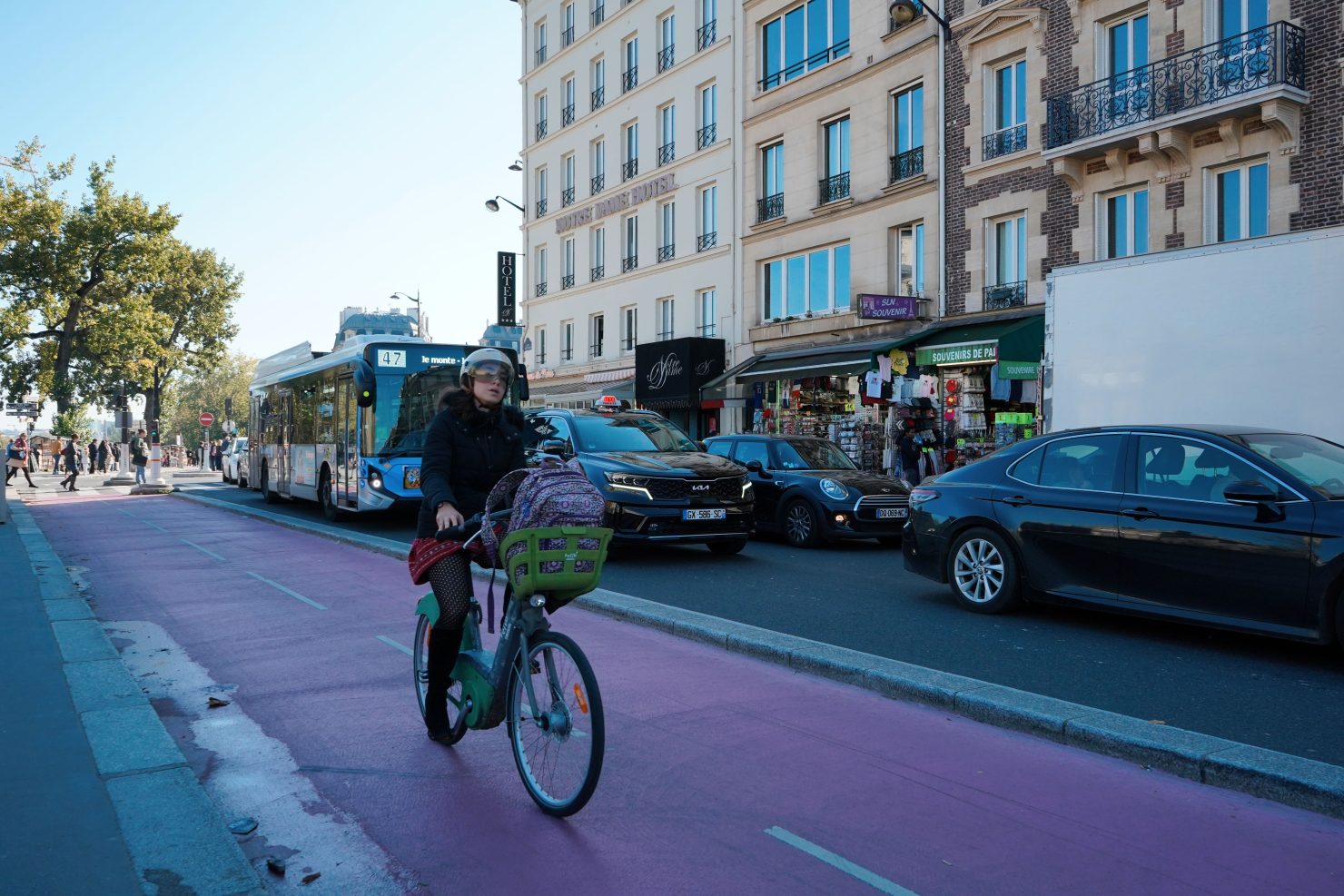
Among some of the benefits of this exceptional idea would be to save time, promote more active lifestyles, reduce air and noise pollution, increase the accessibility to green spaces, as well as to provide individuals with financial relief associated with car transportation.
Tailoring cities to comply with a 15-minute neighbourhood rule requires a tremendous amount of expert planning and strategy to establish the necessary infrastructure.
Collaboration between urban planning, transport and housing policy makers is critical to propel its development. In 2025, the UN Human Settlements Programme published a report to demonstrate regional trends and advancements on spatial inclusion and community resilience.
They discuss how the 15-minute city is a major trending solution for the regeneration of spatial inclusion, emphasising its importance in providing equal socioeconomic opportunities and inclusion for lower-income households.
Paris has championed the 15-minute city concept, strategically reshaping inner-city infrastructure to improve the quality of life of Parisian residents. Implementation of the model was instigated in 2020, and as a WRI Ross Centre Prize for Cities finalist in 2021-2022, the city has sparked a global movement, influencing other countries, such as Shanghai, Melbourne and Ottawa to adopt the model.
By prioritising the needs of its residents with amenities becoming accessible within 15-minutes, the population thrive in a refreshingly sustainable environment.
Future research is needed to optimise the process of implementing 15-minute cities across other cities, and identify potential barriers.
For 30 years, MDPI has been built on the conviction that scientific knowledge should be shared immediately and freely with everyone, What began as an idea has grown into a portfolio of more than 500 fully Open Access journals, supported by a global community of researchers, editors and reviewers who make this exchange of knowledge possible.
Click here to learn more about MDPI’s 30th anniversary.