


How MDPI’s Academic Publishing Workshops Can Empower Researchers
MDPI believes that knowledge should be accessible and available to all for the benefit of the academic community. As a pioneer in Open Access (OA) publishing, with 30 years of experience sharing multidisciplinary research results openly, MDPI continues to share this expertise to empower academic growth.
As part of its commitment to OA publishing, MDPI offers opportunities to academics in the form of Academic Publishing Workshops (APWs).
In this article, we explain how APWs can improve the chances of researchers’ work being successfully published and how to get involved.
What are Academic Publishing Workshops?
APWs are expert-led sessions that aim to demystify the OA publishing process and equip academic authors with the skills and knowledge needed to successfully publish their work.
APWs are free to attend and can be conducted both online and in-person. In-person sessions are delivered at universities and research institutions, scientific academic centres, academic conferences and PhD workshops.
What topics are addressed in APWs?
The workshops cover a wide range of topics that are designed to prepare attendees for their career in a highly competitive industry. MDPI will also tailor the sessions to the needs of the institution.
Topics covered by the APWs include:
Manuscript preparation
- Structuring research articles
- Creating impactful narratives
- How to find the right journal
- Navigating academic databases
- Raw data usage and proper citation
Introduction to MDPI and Open Access
- Types of publishing models and the benefits of Open Access
- MDPI’s services for authors
- Careers in publishing
MDPI’s editorial process
- Step-by-step walkthrough of the editorial process
- How to peer review
- Evaluation criteria for and from reviewers
- Reasons for manuscript rejection and how to respond
Research and publication ethics
- Understanding the principles of publication ethics
- Exploring ethical issues such as plagiarism, authorship, data falsification, and conflict of interest
- Adapting to the use of AI
- Learning about MDPI’s standards and requirements
Who can benefit from APWs?
MDPI offers workshops to researchers at all stages in their careers and particularly encourages the participation of early career researchers.
APWs share knowledge that can only be gained from spending extensive time as a researcher and leverage insights from experts across the company. There are many important elements of a career as a researcher beyond research and writing articles, and these workshops provide early career researchers with opportunities to ask questions and speak to experts who are willing to share valuable information.
Sessions are tailored to the attendees, specifically designed to support researchers to create and share the best research possible within the academic community.
Experts and stakeholders working in various roles across the publishing industry are also encouraged to utilise the workshops for collaboration and knowledge sharing.
Why attend MDPI’s APWs?
“Our APWs provide attendees with a publisher’s perspective [and] help to strengthen the communication between the researcher and publisher.” – Mary O’Sullivan, Journal Relations Specialist for Cancers, Vision, Dentistry and Gastrointestinal Disorders
Participants of MDPI’s workshops will gain professional insight into the world of OA publishing and improve their academic writing skills. They will learn about the peer review process and how it maintains research quality and develop a deeper understanding of the publishing process.
MDPI’s APWs equip researchers with the skills needed to successfully publish their work, increasing the impact of their research. The workshops are free to attend, and MDPI ensures that they are accessible and available to diverse audiences.
The success of APWs
MDPI has hosted successful workshops across the globe, sharing advice and expertise to researchers at various career stages.
Open Science Insights
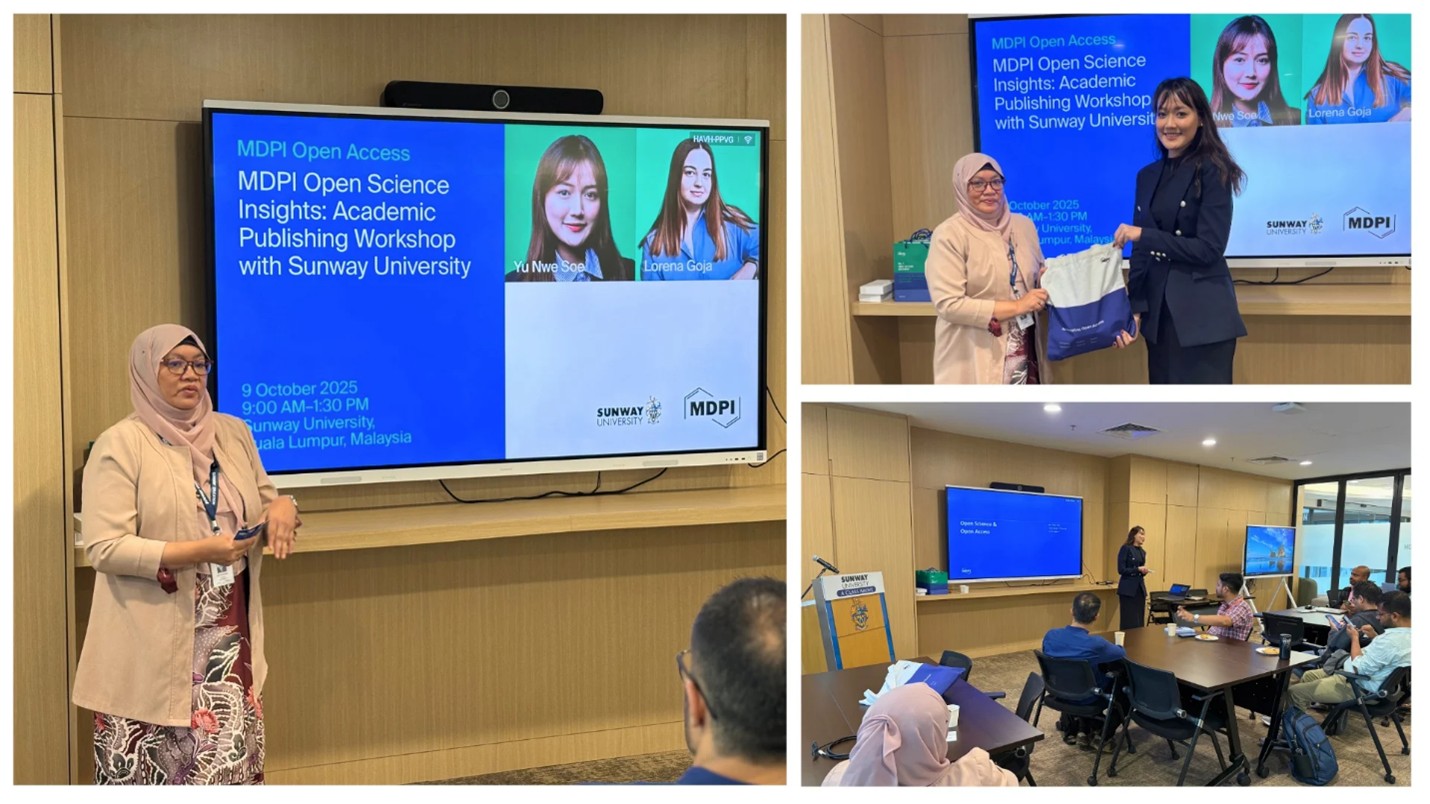
On 9 October 2025, Sunway University in Malaysia hosted a comprehensive APW in collaboration with MDPI that was attended by faculty members, early career researchers and PhD students.
The workshop was led by Prof. Suzana Yusup, Deputy Dean for Research and Sustainability, and featured Ms. Yu New Soe and Ms. Lorena Goja as expert speakers. The session included an introduction to the OA publishing model and MDPI, practical advice on writing high-quality academic papers, and addressed the emerging landscape of AI in scientific publishing.
Click here to read more about the success of the workshop.
Writing and Publishing in the Age of Artificial Intelligence (AI)
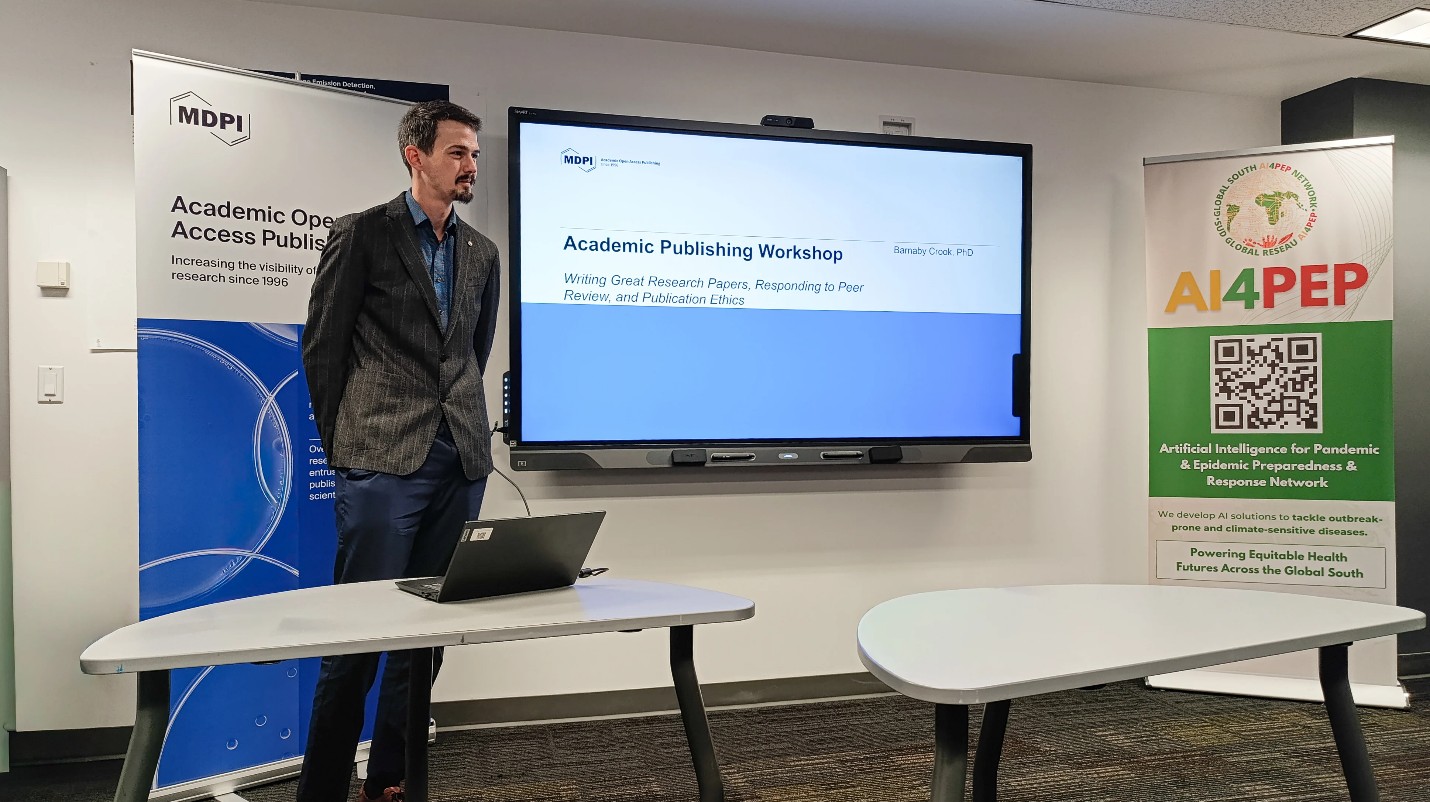
On 21 November 2025, MDPI hosted an APW at the University of Toronto, Canada, that was attended by students, trainees and faculty members.
The session was run by Prof. Jude Kong and Dr. Barnaby Crook, who discussed the ethical challenges and opportunities that AI and machine learning modelling bring to academic publishing practices.
Click here to read more about the success of the workshop.
How to get involved
MDPI is committed to empowering academic growth, with APWs ensuring that researchers are equipped with the skills and knowledge needed to successfully publish their work and improve the impact of their research.
Keep an eye on MDPI’s news and announcements page to see upcoming APWs and their important registration details, alongside the tailored program and guest speakers. Registration links to each workshop will be provided when the workshop is announced.
If you are interested in organising an APW at your institution, contact your local MDPI office.
Click here to learn more about how MDPI informs the academic community about OA publishing.




Open access policy can cause publishing ( APC)cost high.
For MDPI journals, authors pay a one-time Article Processing Charge (APC) to cover the costs of peer review administration and management, the professional production of articles in PDF and other formats, the dissemination of published papers in various venues, and other publishing functions. In traditional publishing models, these costs would be covered by subscription fees, typically paid for by institutions.
For more information on MDPI’s APCs, please visit this link: https://www.mdpi.com/apc
All the best.