
Biomimetics MDPI: Journal Spotlight
For MDPI, 2026 brings opportunity for celebration and reflection. Not only does it mark 30 years of MDPI’s commitment to advancing open science, but it also coincides with many monumental anniversaries for some of MDPI’s leading journals.
To celebrate its 10th anniversary, this edition of our Journal Spotlight will be looking at the achievements and growth of Biomimetics (ISSN 2313-7673).
Biomimetics is an international, peer-reviewed Open Access journal dedicated to research related to the most basic aspects of living organisms and the transfer of their properties to human applications.
Editor-in-Chief: Prof. Dr. Stanislav N. Gorb
Current Impact Factor: 4.2
Current CiteScore: 6.2
Statistics as of August 2026.
A Biomimetics MDPI timeline
- 2016 – Inaugural issue was released
- 2020 – Biomimetics was indexed in Scopus (Elsevier)
- 2021 – Biomimetics was indexed in SCIE (Web of Science)
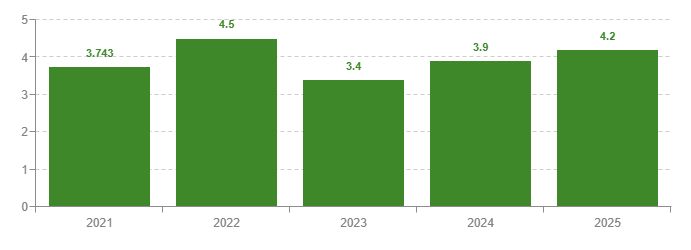
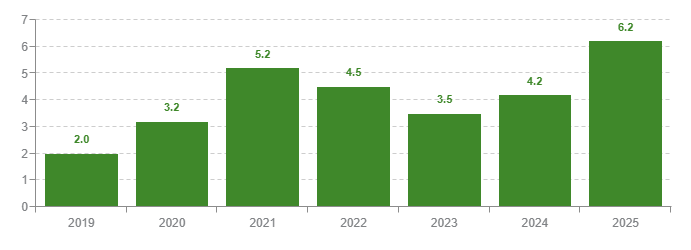
- 2022 – Biomimetics received its first Impact Factor of 3.7 and CiteScore of 5.2
- 2026 – 10th anniversary of Biomimetics and the journal became affiliated with the Robotics Society of Singapore (RSS)
Editor-in-Chief
Prof. Dr. Stanislav N. Gorb has been the Editor-in-Chief of Biomimetics since 2022.
He is a professor and director at the Zoological Institute of Kiel University, Germany, and has a strong background in biology and life sciences. With a PhD in zoology and entomology from the Institute of Zoology of the Ukrainian Academy of Sciences in Ukraine, Prof. Dr. Stanislav N. Gorb continued his career as a postdoctoral researcher at the University of Vienna, Austria, and later was appointed as a group leader at the Max Planck Institutes for Developmental Biology in Tübingen. He has been a member of the German National Academy of Sciences Leopoldina since 2011.

His research interests focus on morphology, structure, biomechanics, physiology and evolution of surface-related functional systems in insects. He has received a wide array of awards throughout his academic career, most recently the Verrall Lecture and President’s Medal of the Royal Entomological Society.
Aims & scope
The journal’s first editorial piece highlights the influence of biomimetics in new and improved technologies, including examples such as Velcro and types of plane wings. Biomimetics’ main concept, according to the journal, is that nature and evolution have already solved many future engineering problems and will continue to be a central theme in future developments.
Following his appointment as Editor-in-Chief, Prof. Dr. Stanislav N. Gorb set out his vision for the journal:
“My vision is to maintain a balance between different disciplines, to make the journal a forum in order to unite scientists from different disciplines and parts of the world, and to increase the visibility and circulation of the journal worldwide.”
The journal’s scope includes:
- Biomimetic mechanisms and design
- Biomimetic robotics
- Nanotribology, nanomechanics, micro/nanoscale studies on biological systems
- Biomimetics inspired by animal and plant biomechanics
- Synthetic and biohybrid systems
- Self-organisation and cooperative behaviour
- Bioinspired sensing
A full list of topics in the journal’s scope can be found here.
Journal metrics

Most cited and viewed
The most cited paper of all time published in Biomimetics, as of August 2026, is titled: “Metal Oxide Nanoparticles as Biomedical Materials”, which is a comprehensive review defining specific applications of metal oxide nanoparticles in various fields of nanomedicine. The journal’s most viewed paper of all time is: “The Spine: A Strong, Stable, and Flexible Structure with Biomimetics Potential”. This review provides a brief perspective of the development of the spine in vertebrates.
Impact Factor
Biomimetics received its first Impact Factor of 3.7 in 2022 and currently holds an Impact Factor rating of 4.2.
The journal is placed in Q1 for the “Engineering, Multidisciplinary” and Q2 for the “Materials, Science, Biomaterials” Journal Citation Report (JCR) categories.
CiteScore
The journal’s CiteScore sits at 6.2 as of 2026.
Biomimetics is positioned in Q2 for several CiteScore categories, including “Biomedical Engineering”, “Biotechnology”, “Biomaterials” and “Molecular Medicine”.
Journal metrics are important tools for evaluating and comparing journals. Click here to learn more about Why Journal Metrics are Important and How To Use Them.
Indexing
Biomimetics is indexed within a large range of databases and archives, including:
- BibCnrs
- CNPIEC
- Dimensions
- DOAJ
- OSTI
- ProQuest
- SCIE (Web of Science)
- Scopus (Elsevier)
Access the complete list of associated indexing services here.
Altmetrics
As of August 2026, Biomimetics has received 96 mentions across policy documents and patents, and 259 mentions across various news outlets and blogs.
The Biomimetics community
As with all MDPI journals, Biomimetics is enthusiastic about fostering positive relationships with the academic community. It does this through various initiatives, including conferences, awards and affiliations.
Conferences
Conferences present a valuable opportunity to connect with the wider academic community. The journal engages with a wide range of conferences hosted by MDPI.
The 3rd International Conference on Biomimetics takes place from 24 to 26 November 2026, an online event hosted by MDPI to delve into the latest advances in bioinspired technologies and systems.
MDPI is also hosting the 2nd International Conference on Bioengineering from 10 to 13 November 2026. The event will be held in Barcelona, Spain, and will gather leading minds from around the world to discuss transformative advances of bioengineering at the intersection with AI.
See more information regarding upcoming events related to the Biomimetics journal.
Awards
Biomimetics regularly offers various awards to researchers in the field. Currently, the journal is accepting applications for its Travel Award until 31 October 2026 to encourage junior scientists to present their research at relevant academic conferences – the winner will be announced 31 December 2026.
The journal also offers a Best Paper Award and an Outstanding Reviewer Award annually; learn more about the journal’s awards.
Affiliations
As of 2026, Biomimetics is proud to be affiliated with the Robotics Society of Singapore (RSS), a professional, not-for-profit organisation that aims to promote robotics and authentic AI among corporations and individuals who believe that authentic AI will play a significant role in the future.
Testimonials
“The overall experience was great. Editors were really helpful to assist in every step along the way. The reviewers were very specific in addressing issues of the manuscript instead of most of the other journals giving too non-specific comments. Publication should be made this simple and straight to the point as this process is normally the main reason people shy away from research.” – Ken Meng, Author
Submitting a manuscript
Manuscripts for Biomimetics should be submitted online at susy.mdpi.com.
Prior to submitting, we recommend that authors explore the useful resources on our instructions for authors webpage.
To submit your manuscript, register and login to the submission website. Once you have registered, click here to go to the submission form. The submitting author, who is generally the corresponding author, is responsible for the manuscript during the submission and peer review process.
All co-authors can see the manuscript details in the submission system if they register and login using the e-mail address provided during manuscript submission.
If you’d like to find out more about Biomimetics and its publication process, please visit the journal website.
Stay up-to-date with Biomimetics MDPI: