


Insights into MDPI Top Picks: July 2026
July has seen a range of exciting research published across MDPI’s Open Access journals. In this roundup, we highlight research exploring how refermenting cider with different yeast communities influences the sensory qualities of the final product. We also feature advances in technology for detecting drugs commonly used in drug-facilitated sexual assault, alongside a study investigating how large-scale open-air festivals can impact surrounding river ecosystems. Finally, we explore research revealing how the remnants of past galaxy collisions and mergers are helping astronomers better understand how galaxies have evolved over billions of years.
Combination of Destructive and Non-Destructive Analyses for Microbiological and Qualitative Characterization of Refermented and Yeast-Aged Apple Cider
Published in Beverages, June 2026 | University of Tuscia, Department for Innovation in Biological, Agro-Food and Forest Systems
The apple cider market in Italy is experiencing significant growth, driven by numerous small-scale artisanal producers who combine local apple varieties with traditional processes to offer complex and diverse products.
Refermentation is a natural chemical process whereby yeast, or bacteria break down sugars or starches in an already fermented beverage. In the case of apple cider, refermentation can change the chemical composition of the resulting product and change the overall flavour profile. This is strongly influenced by the species of yeast present during the refermentation process.

The sensory quality of refermented products is strongly influenced by the composition of yeast strains used.
This paper evaluated the effect of different cultures of yeast on the quality of refermented cider. Selected yeast consortia were used to induce refermentation of still cider, and the products were characterised after 7 and 14 months of aging.
Analyses using HPLC-DAD and GC-MS were conducted to evaluate the composition of polyphenols and volatile organic compounds in the ciders refermented with different cultures.
The researchers found that the choice of yeast had a major impact on the finished cider. Ciders refermented with selected wild yeast cultures developed smoother tannins, increased levels of beneficial plant compounds such as resveratrol, and more complex fruity and floral aromas compared with the control. These cultures also produced less cloudy ciders, helping to improve clarity and consistency without sacrificing the distinctive characteristics associated with local apple varieties.
The findings suggest that using carefully selected indigenous yeasts could help artisanal cider producers create more reliable, high-quality products while preserving the unique microbial communities that contribute to a cider’s regional identity, known as its microbial terroir.
Tidal Structures Around Edge-On Galaxies in Deep Imaging Surveys
Published in Galaxies, July 2026 | Brigham Young University, Department of Physics and Astronomy
Galaxies carry the signatures of their past. When they collide with or absorb smaller companions, they can leave behind faint streams, shells, loops, and other diffuse structures that remain visible for billions of years. These features act like cosmic fossils, helping astronomers understand how galaxies have grown and evolved over time. However, they are extremely faint and require deep imaging to detect.
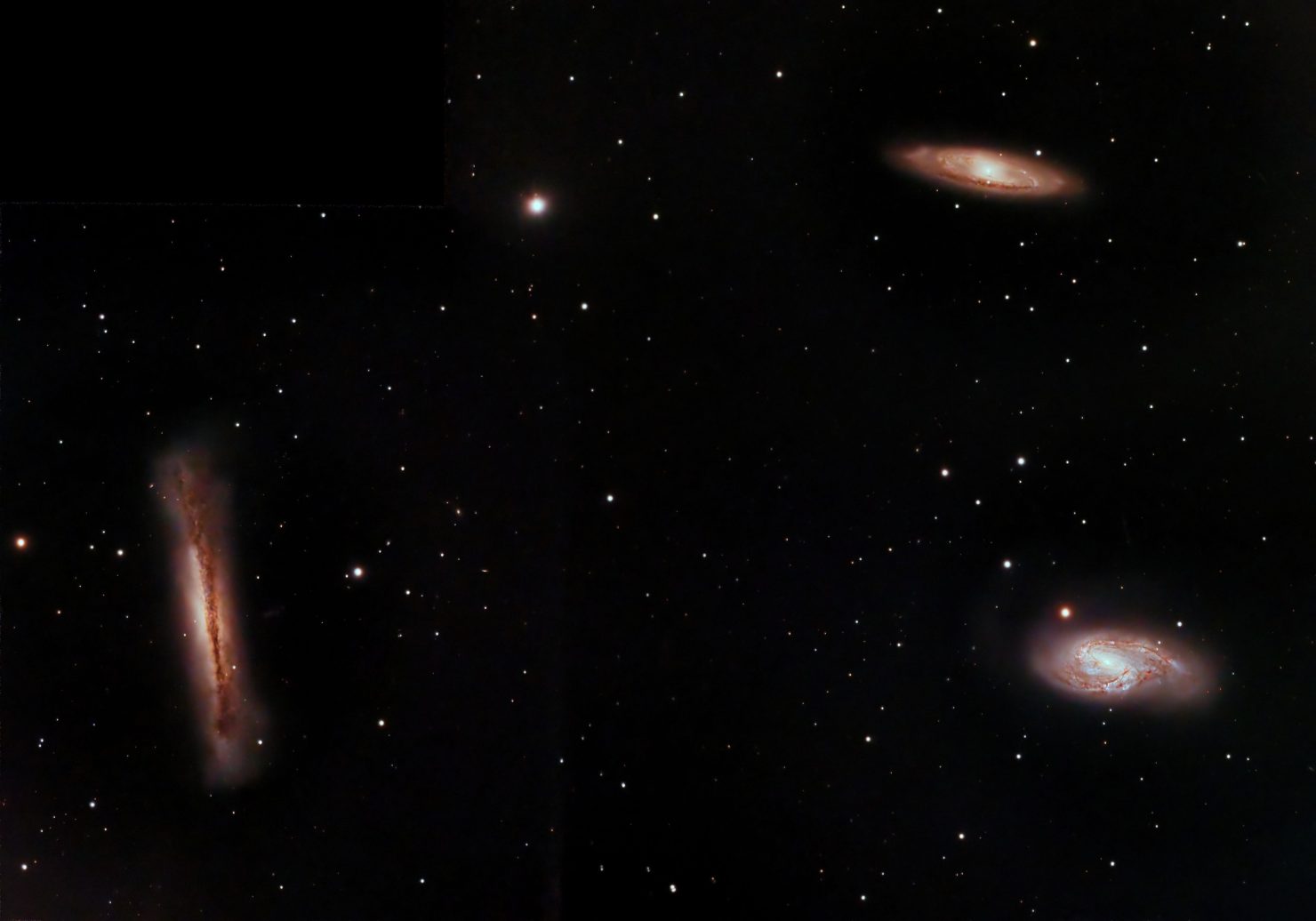
As simulations become more sophisticated and observational data reach greater depths, the comparison between theory and observation in space research will become increasingly robust.
Researchers analysed more than 19,000 edge-on galaxies using deep images from multiple sky surveys, together with targeted follow-up observations, to search for these tidal features. By studying galaxies edge-on, the team could more easily identify faint structures extending beyond the galactic disk.
The researchers found that around 6% of galaxies showed visible evidence of past interactions, including tidal streams, tails, shells, loops, stellar plumes, and disrupted satellite galaxies. These features were also more common in larger galaxies.
Mr Kyle Adams, lead author of the study, said:
Our study investigates the incidence of faint tidal features around edge-on galaxies, such as streams, tails, or shells, which provide evidence of past mergers and interactions. Using two large, independent galaxy samples, we found for the completeness-limited subsamples that about 6% of the galaxies contain visible tidal structures, a lower rate than many modern hydrodynamical cosmological simulations predict. The consistency of this result across both samples suggests that the discrepancy is not simply caused by the choice of catalogue or sample selection. These findings provide an important observational benchmark for testing and improving models of how galaxies form and evolve. They are also timely as deeper surveys, including the Vera C. Rubin Observatory’s Legacy Survey of Space and Time (LSST), begin to reveal even fainter structures and help determine whether current simulations overpredict tidal debris or whether much of it has remained undetected in existing observations.
While many earlier cosmological simulations predicted much higher rates, newer high-resolution models closely match the observations. The researchers also note that deeper imaging reveals additional faint structures, suggesting current surveys likely miss some tidal debris. Future observatories such as the Vera C. Rubin Observatory’s Legacy Survey of Space and Time (LSST) will help uncover these hidden features and further improve our understanding of galaxy evolution.
Preventing Drug-Facilitated Sexual Assault: A Smartphone-Readout Lateral Flow Assay for GBL Detection in Water and Saliva
Published in Chemosensors, July 2026 | University of Valencia, Spain
Drug-facilitated sexual assault (DFSA) involves the use of substances that impair a person’s awareness, memory, or ability to resist an assault. Given the severity of the issue, rapid and reliable detection of such substances is essential for both forensic investigations and public safety, as explained by Prof. José Saéz, corresponding author of the study:
The rising incidence of DFSA highlights the critical need for robust, on-site detection tools to safeguard individuals in social environments. For years, our research group, MODeLiC, has been dedicated to this challenge. In our recent study, we successfully developed a portable lateral flow assay coupled with a smartphone-based readout for the rapid detection of gamma-butyrolactone (GBL) in water and saliva.
Research published in the Open Access journal Chemosensors developed a fluorescent sensor capable of detecting γ-butyrolactone (GBL), a drug that is rapidly converted into γ-hydroxybutyric acid (GHB) in the body. Because both compounds are associated with DFSA and are difficult to detect within a short timeframe, the researchers aimed to create a simple, portable testing method that could identify GBL in saliva.
The fluorescein-based sensor produced a measurable decrease in fluorescence as GBL concentration increased, allowing the researchers to detect the drug at concentrations well below those associated with intoxication. The sensor also showed high selectivity, responding to GBL while remaining unaffected by other drugs commonly linked to DFSA.
To make the technology suitable for use outside the laboratory, the team incorporated the sensor into a paper-based lateral flow test that can be analysed using a smartphone. The low-cost device provided rapid results from synthetic saliva samples, offering a practical approach for on-site screening. Prof. José Saéz explains:
By utilizing a selective fluorescein-based chemosensor, our method achieves detection limits well below toxicological thresholds without suffering interference from other common drugs of abuse. Ultimately, our goal is to translate this academic research into tangible citizen protection. This motivation has led to the creation of our spin-off company, CELENTIS, which aims to commercialize these chemical sensors by integrating them into everyday wearable devices, such as bracelets, empowering people to easily and discreetly test their beverages.
The authors conclude that the platform could support forensic investigations, clinical testing and preventative screening by providing a fast, sensitive, and portable method for detecting GBL. They note that the system meets the World Health Organization’s ASSURED criteria for point-of-care diagnostic devices, highlighting its potential for real-world applications in improving public safety.
Down by the Riverside: Impacts of a Large Open-Air Festival on the Microalgal Community
Published in Phycology, June 2026 | Department of Functional and Evolutionary Ecology, University of Vienna, Austria
Rivers have always been essential to humankind as they are essential to the development of transportation, agriculture, and food. However, human activity interferes with river ecosystems, with many effects still poorly understood.
With an increasing human population over the last few decades, this interference has increased. Recreational events, such as large, open-air music festivals, attract thousands of visitors into close vicinity or directly into rivers. This can stress aquatic ecosystems, causing habitat degradation by potentially impacting the composition, diversity, and abundance of water organisms.

One serious environmental problem associated with large festivals is waste management and disposal. For festivals in close proximity to rivers, this extends to the river ecosystem.
A study published in Phycology investigated how Austria’s FM4 Frequency Festival affected the River Traisen, monitoring water quality and algal communities before, during and after the four-day event.
The researchers found that phosphorus, dissolved organic carbon and chloride concentrations all increased significantly during the festival, indicating short-term pollution from human activity. While the overall amount of algae remained stable, the composition of the river’s biofilm changed, with pollution-tolerant species becoming more dominant and the community shifting towards one with greater heterotrophic activity.
The festival also increased the diversity of algae downstream, partly because visitors walking and swimming in the river disturbed the riverbed and resuspended algae into the water column. Although water chemistry returned to normal within days, changes to the algal community persisted for several weeks.
The findings highlight how even short-lived mass events can temporarily alter freshwater ecosystems, demonstrating the importance of monitoring and managing recreational activities to help protect river health.
Click here to access the full list of MDPI Journals where you can discover the latest science, from breakthroughs in space exploration to advances in drug detection, environmental monitoring, and more.