

The Importance of Graphical Abstracts
Scientific papers must communicate a large amount of information to convey their argument. Traditionally, written abstracts have been used to summarize this information and effectively communicate key data and findings. However, graphical abstracts are becoming increasingly popular with academics.
Like written abstracts, they aim to present important information as effectively as possible. Yet graphical abstracts have the advantage of being visually engaging.
Here, we’ll explain what a graphical abstract is and their importance in the world of scientific publishing.
What is a graphical abstract?
A graphical abstract is a single, coherent image designed to offer a visual overview of a research paper. It is generally located beneath the text abstract and is intended to help readers and academics understand the findings and implications of a particular study. In turn, this visual stimulus aids the reader in identifying appropriate studies for their own research or interests.

Usually, scientific studies consist of numerous sections, such as the research background, methods, data and findings, and conclusion. Readers or other academics who come across a study need to quickly decide if it’s relevant to them. A graphical abstract can assist in communicating the main points of a study, thus helping others decide whether the material is relevant to them.
How a graphical abstract benefits your paper
The human brain processes visual information faster than words. Indeed, humans can identify an image in a matter of milliseconds. Reading a written abstract, which is generally around 250 words, will take us a lot longer.
Graphical abstracts can turn complex research findings into clear, easy-to-understand visual information, helping readers grasp the key message of a paper more quickly. They can also make research easier to discover and share.
By simplifying information and presenting it in a visually stimulating way, an image summary opens the way for research to reach a broader audience. Research suggests that graphical abstracts can improve engagement in certain social media settings. For example, a study by Ibrahim et al. (2017) found that sharing surgical research with a graphical abstract on social media led to significantly more retweets and article visits than sharing the same research with a text-only abstract.
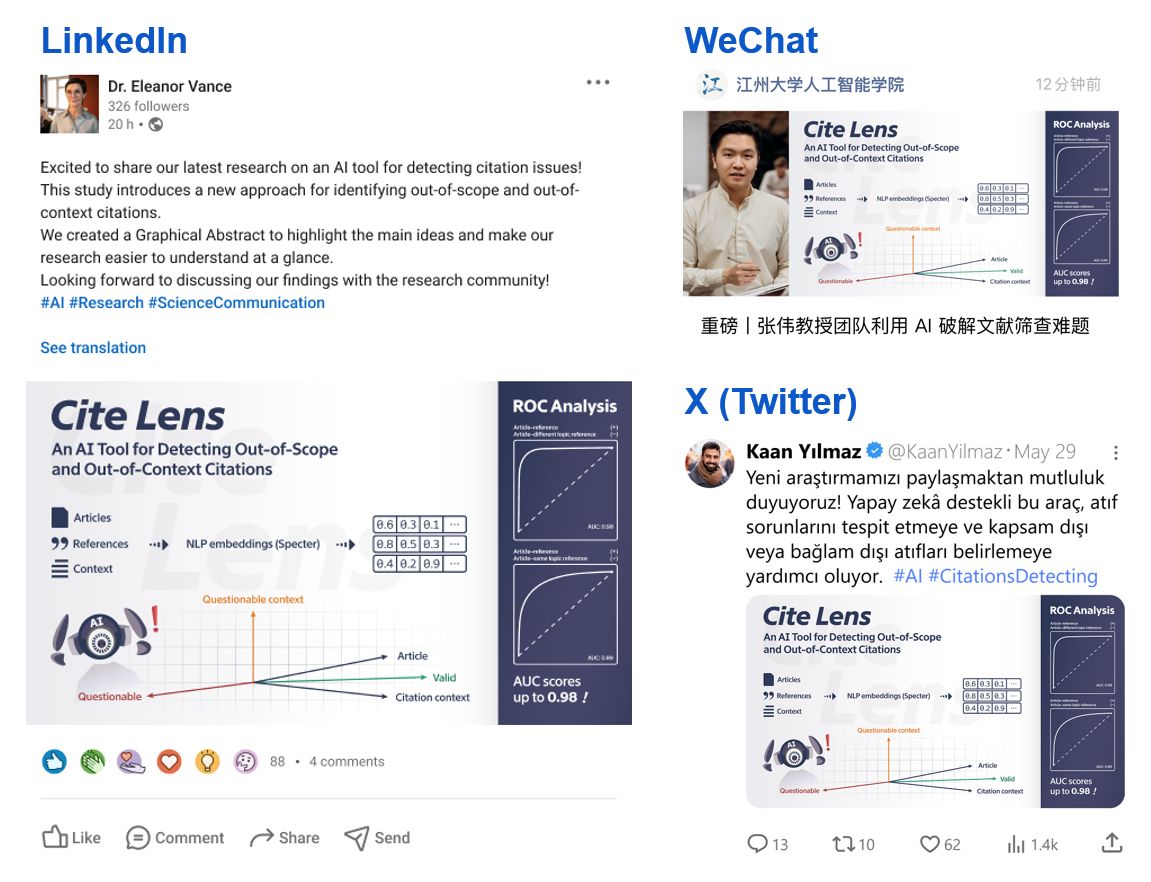
Finally, images can elicit stronger emotions, making them more memorable. The subject-specific terminology or methods employed in a scientific paper may be hard for the average person, or even researchers from outside of your field, to fully understand. However, a graphical abstract can instead focus on how to visualize findings in a relatable or meaningful way, turning this information into impactful visuals that can communicate how the findings may influence our everyday lives.
Who is responsible for creating them?
There has been some debate in the scholarly community about how to appropriately integrate graphical abstracts into the world of scholarly publishing. Should publishers and journals mandate them, or wait for authors to adapt them fully first?
This dilemma doesn’t answer a more important question, though – who should be responsible for the graphic design? If the responsibility falls to the author, then this will require them to invest a lot of time and effort. Would this lead to images being submitted just for the sake of it, rather than being given the care and attention they require?
These are important questions to ask. However, given their increasing usage, authors should still be equipped with the knowledge of how to create a graphical abstract. Let us look at that process now.
How to create a graphical abstract
There are a few key points and steps to be aware of when creating a graphical abstract. Instructions may differ from publisher to publisher, but these are the MDPI guidelines:
- A graphical abstract should not be exactly the same as any figure in the body of the paper, a simple superposition of several subfigures, or a combination of the text abstract and a picture.
- It should be original and unpublished artwork. Any postage stamps, currency from any country, or trademarked items should not be included in it. No copyrighted material should be used in a graphical abstract.
- It should be a high-quality illustration or diagram in any of the following file formats: PNG, JPEG, or TIFF.
- The minimum required size is 560 × 1100 pixels (height × width).
- Written text in a graphical abstract should be clear and easy to read. It is recommended to use fonts such as Times, Arial, Courier, Helvetica, Ubuntu, and Calibri.
- Use symbols correctly, and do not use commas instead of decimal points in numbers.
- Avoid large blocks of text or large blank spaces in the image.
- Do not include “Graphical Abstract” as a heading in the image.
On top of these instructions, remember the purpose of your graphical abstract. It should represent the topic of your article in a striking way. And, like your research paper, it should be unique.
MDPI Author Services helps you create your graphical abstract
Our professional designers create custom graphical abstracts to clearly show the main idea of your research and meet journal requirements.
Interested in letting MDPI Author Services create a clear, impactful visual summary of your research? Make sure you provide the full manuscript, along with any key research findings, methods, processes, visual elements, or other information you would like to highlight in the graphical abstract. You can also provide reference images or sketches to the team understand your expectations for the content and design style.
The first draft is provided within 5 business days after receiving all the required materials. Each round of revisions usually takes around 1 business day. Reasonable revisions based on the author’s feedback are supported to help ensure that the final design accurately presents the research content and meets your expectations. Adjustments will continue to be made until you are satisfied with the final design.

Click here to see examples of MDPI Author Services’ graphical abstract designs and get a free quote.
Subscribe to the Author Services Newsletter for tips, discounts, and updates.