
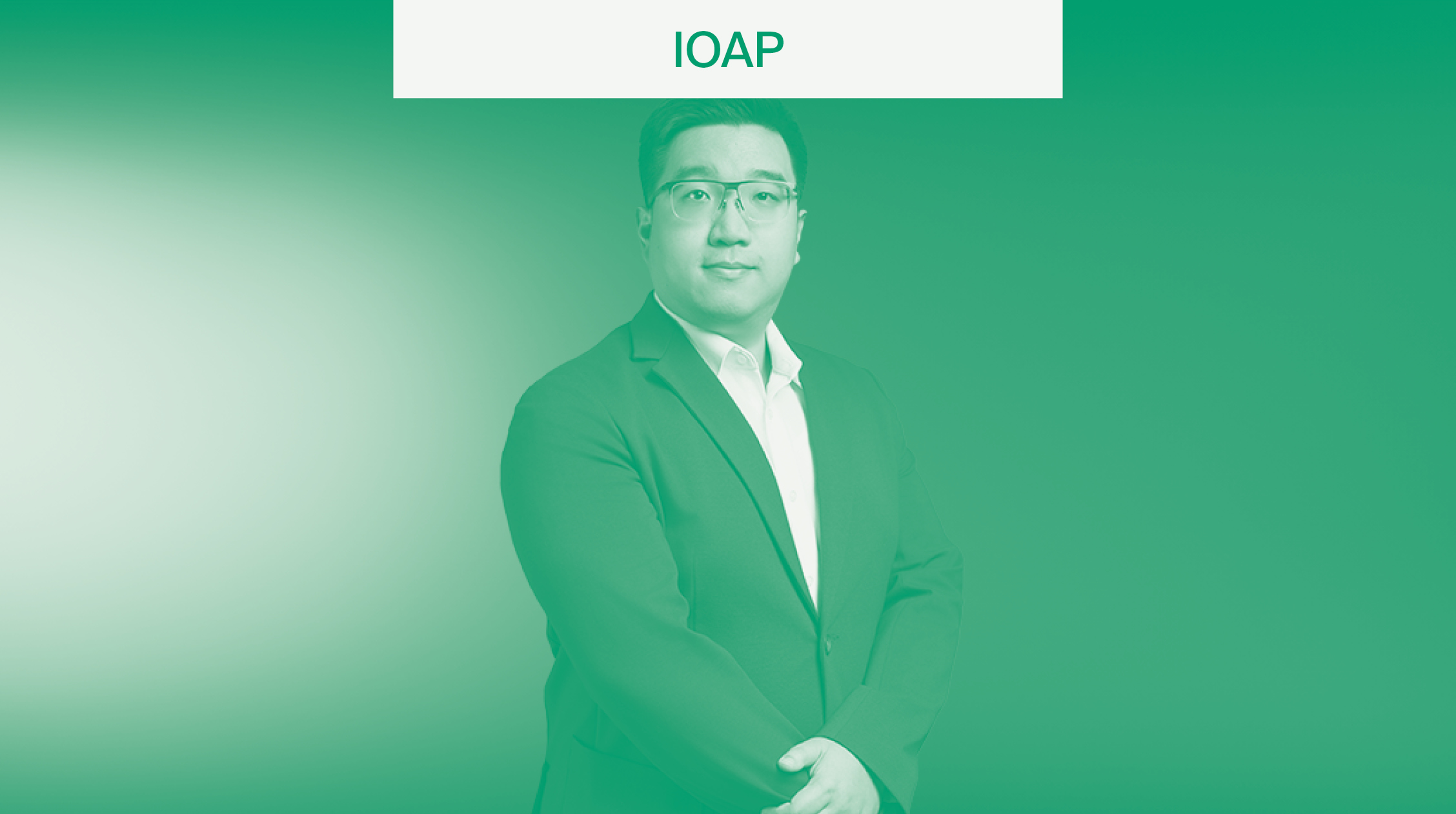
Insights Into IOAP from MDPI’s Institutional Partnerships Manager Ryan Siu
As a leader in Open Access publishing, MDPI has gained a wealth of industry knowledge to help advance open science. It primarily does this by ensuring that research from its more than 495 journals is fully accessible, at no cost to the reader. In addition, its Institutional Partnerships team foster global collaboration, empowering scholars to share knowledge worldwide.
This is especially important for countries with less access to resources, as it removes critical barriers to research. More scholars are now publishing in OA formats following guidance from national and international initiatives, such as the European Union’s Plan S, which states that research should be immediately available upon publication.
Through the Institutional Open Access Program (IOAP), institutions are provided with tailored solutions to manage publication costs, and can gain access to an institutional dashboard. To explore the program in detail, read our article IOAP Explained.
Here, we highlight recent developments within the Institutional Partnerships team and provide a closer look at the ongoing work that sustains and drives the program.
Who are the Institutional Partnerships team?
MDPI’s Institutional Open Access Program (IOAP) is led by a specialist team of experts responsible for managing partnerships across different regions.
In this article, we speak with Ryan Siu, Institutional Partnerships Manager for North America and Brazil. Ryan joined MDPI in 2021 and has since held various roles across the company. His experience spans editorial operations and stakeholder outreach, equipping him with a broad understanding of the publishing landscape.
Through the IOAP, he leads discussions on Open Access publishing models, negotiates agreements, and supports institutions in implementing sustainable workflows tailored to their needs.
What are the common misconceptions surrounding MDPI’s Institutional Open Access Program (IOAP)?
There are two major misconceptions surrounding the Institutional Open Access Program, with the first being that it involves a membership fee or certain obligations.
The IOAP is free to join and carries no binding obligations. Unlike similar programs offered by other publishers, which often require payment or contractual commitments, our base model is completely free of charge. We provide flexible agreement structures tailored to the distinct needs of each institution.
The second major misconception associated with the IOAP is that it is designed only for large institutions.
While we do encourage consistent publication activity, the Institutional Open Access Program is not limited to large universities or research centres. In fact, we offer diverse workflows and agreement types that accommodate institutions of all sizes, supporting inclusive participation in Open Access publishing.
How important are Open Access publishing models in supporting institutions and their researchers?
Balancing financial constraints with the need for equitable access to research is an ongoing challenge for many academic institutions. Open Access publishing models have emerged as a cornerstone of scholarly communication, enabling broader dissemination of knowledge. Among these, transformative agreements and read-and-publish deals have played a pivotal role in transitioning subscription-based journals to Open Access models. However, this shift has also introduced new budgetary and administrative pressures on institutions.
Through the IOAP, our goal is to reduce financial pressures and streamline administrative workflows. We provide support to institutions and empower researchers by advancing open science.
How do you maintain good working relationships with institutional partners through the IOAP?
We prioritise open communication and transparency as the foundation for building trusted and lasting relationships with our institutional partners. Feedback and suggestions are always welcome, allowing us to continuously refine our services to better meet our partners’ needs.
To foster strong connections, we arrange regular meetings, whether online or in person, and make a point to engage at conferences and events—not only to address concerns but also to maintain a warm, collegial bond. We strive to develop a relationship that is both comfortable and professional, supported by active communication channels with faculty members who serve on our Editorial Boards through our Editorial Team.
As the Institutional Partnerships Manager for North America and Brazil, how would you explain the current needs of institutions in these regions?
I observe that institutional priorities revolve around the need for stability and predictability. In an environment surrounded by regulatory shifts and fluctuating funding landscapes, institutions are seeking a balanced approach that supports both Open Access publishing goals and financial sustainability.
At MDPI, we recognise these evolving demands and strive to support institutions through flexible agreements. We aim to contribute to a more stable and equitable publishing landscape, helping institutions navigate amidst the uncertainty.
How can the Institutional Open Access Program support institutions now that they are discovering the benefits of Open Access?
The IOAP features a wide range of agreement models, designed to meet the diverse needs of each institution. Membership is free of charge and requires no commitment, offering institutions a risk-free way to explore Open Access partnerships.
Unlike programs with limited benefits for corresponding authors, we extend the base discount to all affiliated authors on a manuscript, whether they are listed first or hundredth, ensuring equitable access to publishing support across our network of 900+ institutional partners.
As institutions shift away from subscription agreements, many gain budgetary flexibility to invest in new initiatives. We believe MDPI, through the IOAP, is well-positioned to be a trusted and strategic publishing partner in this ever-changing landscape.
How might the cancellation of subscription agreements affect the future dissemination of scientific research?
The cancellation of traditional journal subscriptions may have a limited negative impact on the dissemination of scientific research. This shift could serve as a catalyst for innovation, encouraging institutions and publishers to explore more efficient and accessible channels for sharing scholarly knowledge.
As the momentum behind Open Access publishing continues to grow, research outputs are increasingly made available to a wider audience without the barrier of paywalls. This transition fosters a more inclusive and transparent research environment, empowering international collaboration and accelerating scientific progress.
MDPI supports the transition to Open Access publishing
Open Access publishing ensures that articles are freely available to anyone, removing barriers to knowledge and enabling the wider dissemination of research. This model allows work to be reused at no additional cost, provided proper accreditation is given.
By choosing Open Access, authors benefit from transparent copyright and licensing practices, and their research reaches a broader global audience.
With more than 900 institutional partnerships, MDPI’s Institutional Open Access Program (IOAP) team continues to drive success in advancing open science and strengthening Open Access initiatives worldwide.
To learn more about how your institution can participate and explore the benefits of IOAP, please visit the IOAP website.