
Recycling MDPI: Journal Spotlight
For MDPI, 2026 brings great opportunity for celebration and reflection. Not only does it mark 30 years of MDPI’s commitment to advancing open science, but it also coincides with many monumental anniversaries for some of MDPI’s leading journals.
To celebrate its 10th anniversary, this edition of our Journal Spotlight will be taking a look at the achievements and growth of Recycling (ISSN 2313-4321).
Recycling is an international, peer-reviewed Open Access journal that provides a forum for research and studies on recycling, resource recovery, and waste utilisation across many industries.
Editor in Chief: Prof. Dr. Michele John
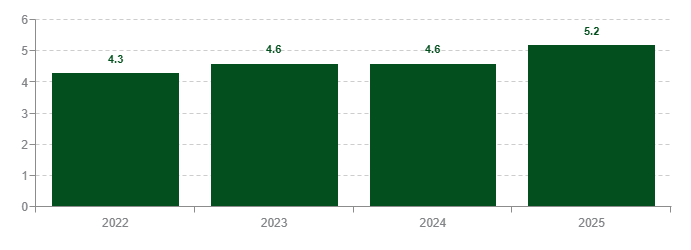
Current Impact Factor: 5.2
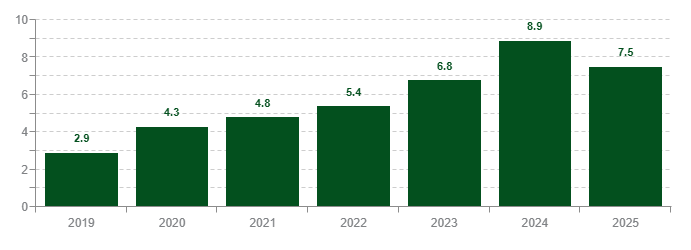
Current CiteScore: 7.5
Statistics as of June 2026.
A Recycling MDPI timeline
- 2016 – Inaugural issue was released
- 2019 – Recycling was indexed in Scopus (Elsevier)
- 2020 – Recycling received its first CiteScore of 2.9
- 2021 – Recycling was indexed in ESCI (Web of Science)
- 2023 – Recycling received its first Impact Factor of 4.3
- 2026 – 10th anniversary of Recycling
Editor-in-Chief
Editor-in-Chief since Recycling’s launch in 2016, Prof. Dr. Michele John is a resource economist and the Director of the Sustainable Engineering Group (SEG) at Curtin University, Australia. She currently leads an internationally recognised industrial ecology research group with major projects in industrial symbiosis, sustainability education, waste management re-manufacturing and sustainability design and policy.

Prof. Dr. John is also responsible for the MSc Sustainability Transformation Management degree at Curtin University and teaches a range of subjects related to sustainability.
Aims & scope
In the journal’s first editorial piece, Prof. Dr. John discusses the mounding pressure on the world’s finite resources and waste management options as the global population continues to increase, highlighting the importance of reusable materials. The article covers the many advantages of recycling, including the conservation of material resources and providing jobs in new industries.
Recycling provides an online forum for the best practice in waste management, policy, technology, regulations and assessment in order to encourage the uptake of recycled products, systems and cradle-to-grave waste management activities.
“The Editorial Board believes that the Recycling Journal has the opportunity to both promote the need for sustainable development as well as to provide some very valuable and fundamental methodologies and strategies for future waste management and resource development.” – Prof. Dr. Michele John, EiC (2016 – present)
The journal’s scope includes waste processing technologies, circular economy, the economics of recycling and the environmental and social impact of recycling. A full list of topics in the journal’s scope can be found here.
Journal metrics

Most cited and viewed
The Recycling publication that is the most cited paper, as of June 2026, is a review entitled “An Overview of Plastic Waste Generation and Management in Food Packaging Industries”. The journal’s most viewed paper is entitled “Raising Awareness on Solid Waste Management through Formal Education for Sustainability: A Developing Countries Evidence Review”.
Impact Factor
Recycling received its first Impact Factor of 4.3 in 2023 and currently holds an Impact Factor rating of 5.2.
The journal is placed in Q3 for the “Green and Sustainable Science and Technology” Journal Citation Report (JCR) category.
CiteScore
The journal’s CiteScore sits at 7.5 as of 2026.
Recycling is positioned in Q1 for the “Management, Monitoring, Policy and Law” and “General Materials Science” CiteScore categories, and Q2 for the “Waste Management and Disposal” category.
Indexing
Recycling is indexed within a large range of databases and archives, including:
- AGRIS
- BibCnrs
- CNPIEC
- Dimensions
- DOAJ
- FSTA
- OSTI
- Scopus (Elsevier)
- ESCI (Web of Science)
Access the complete list of associated indexing services here.
Altmetrics
As of June 2026, Recycling has received 81 mentions in policy documents, 98 mentions in patents and 131 mentions across various news outlets and blogs.
The Recycling community
MDPI’s Recycling journal is enthusiastic about fostering positive relationships with the academic community it serves, and does this through various awards, affiliations and conferences.
Awards
Recycling grants two Best Paper Awards annually to highlight papers of high quality, scientific significance and extensive influence. All papers published in the journal are eligible for the award.
Learn more about the Recycling awards here, and read our blog article on MDPI’s award programme here.
Conferences
Conferences present a valuable opportunity to connect with the wider academic community. The journal engages with a wide range of conferences hosted by MDPI.
MDPI is hosting the 1st International Online Conference on Recycling from 7 to 8 September 2026. The conference will feature sessions on advances in recycling technologies, plastic and composite waste recycling, metal, battery and e-waste recycling and more.
The 12th World Sustainability Forum is taking place in Hong Kong, China, from 21 to 24 August 2026. Organised by MDPI’s Sustainability journal, the conference will focus on themes such as climate adaptation and ecological conservation, policy frameworks for equitable green transitions, and the circular economy-resource efficiency nexus.
See more information regarding upcoming events related to the Recycling journal.
Testimonials
“MDPI is a highly professional publisher with a large team of editors, support staff, and a large team of highly professional reviewers from around the world and across all disciplines, ensuring that what is published is novel, contributes to the scientific community in open access format with the most important findings in science and technology, and thereby contributes to the scientific and technological advancement of humanity.” – Francisco Carrillo-Pedroza, Author
“My publishing experience with MDPI has been generally positive. The submission process was straightforward and user-friendly, with clear guidelines provided throughout. The peer review process was rigorous and thorough, which helped improve the quality of the manuscript. Communication with the editorial team was prompt and professional, facilitating smooth coordination. One aspect I particularly appreciated was the relatively quick turnaround time from submission to acceptance compared to other publishers. Additionally, the open-access model ensured wide visibility and accessibility of the published work. Overall, I would recommend MDPI for researchers seeking a reputable open-access platform with a solid peer review process and good publication speed.” – Dr Belachew Demiss, Author
Submitting a manuscript
Manuscripts for Recycling should be submitted online at susy.mdpi.com.
Prior to submitting, we recommend that authors explore the useful resources on our instructions for authors webpage.
To submit your manuscript, register and login to the submission website. Once you have registered, click here to go to the submission form. The submitting author, who is generally the corresponding author, is responsible for the manuscript during the submission and peer review process.
All co-authors can see the manuscript details in the submission system if they register and login using the e-mail address provided during manuscript submission.
If you’d like to find out more about Recycling and its publication process, please visit the journal website.
Stay up-to-date with Recycling MDPI: