


Life Underground: The Importance of the Soil Microbiome on Soil Health
Beneath our feet lies one of the most complex ecosystems on Earth. A single gram of soil can contain upwards of 10,000 species of microorganisms that play pivotal roles in the decomposition of organic matter and recycling of essential nutrients like carbon, nitrogen, and phosphorus.
These microscopic communities quietly support plant growth, regulate ecosystems, and even influence human health.
Here, we explore how soil microbes shape ecosystem function, support agriculture, and why protecting them is essential for long-term soil health.
Diversity of life underground
The soil microbiome consists of not only bacteria, but fungi, archaea, viruses, and protists. This plethora of life contributes to a network of biological processes that are critical to plant health, nutrient recycling, and climate regulation.
A review article published in the Open Access journal Diversity reveals the importance of soil microorganisms in enhancing crop nutrition and health through driving essential soil functions such as nutrient cycling, organic matter decomposition and disease suppression. It also explores how environmental factors shape microbial diversity and, in turn, influence crop performance.
Conserving these hidden communities plays a central role in maintaining soil health and supporting resilient ecosystems and agriculture.
How soil microbes drive nutrient cycling
The soil microbiome’s importance comes from its role in nutrient cycling. Without microbial activity, many essential elements would remain trapped in forms that plants cannot use.
All living organisms depend on elements like carbon, nitrogen, and phosphorus. These elements cycle through the environment in processes known as biogeochemical cycles, stages of which are driven by microbial activity.
Microbes break down organic matter, releasing nutrients into forms that plants can absorb. Plants use these nutrients to grow, and the cycle continues.
Practices like intensive farming or deforestation pose significant challenges to the stability of nutrient cycles; therefore, research improving the understanding of these cycles remains a key way of finding solutions to better preserve them.
Carbon cycle
Carbon is the backbone of life. In soil ecosystems, it moves between plants, microbes, and the atmosphere.
Plants absorb carbon dioxide from the atmosphere during photosynthesis, while roots and soil microbes release it back into the atmosphere through respiration as shown in Figure 1. When organisms die, microbes break them down into soil organic matter which is a key carbon store that also improves soil fertility and water retention. Disturbance of the soil can release stored carbon back into the atmosphere, underscoring its critical role in climate regulation.
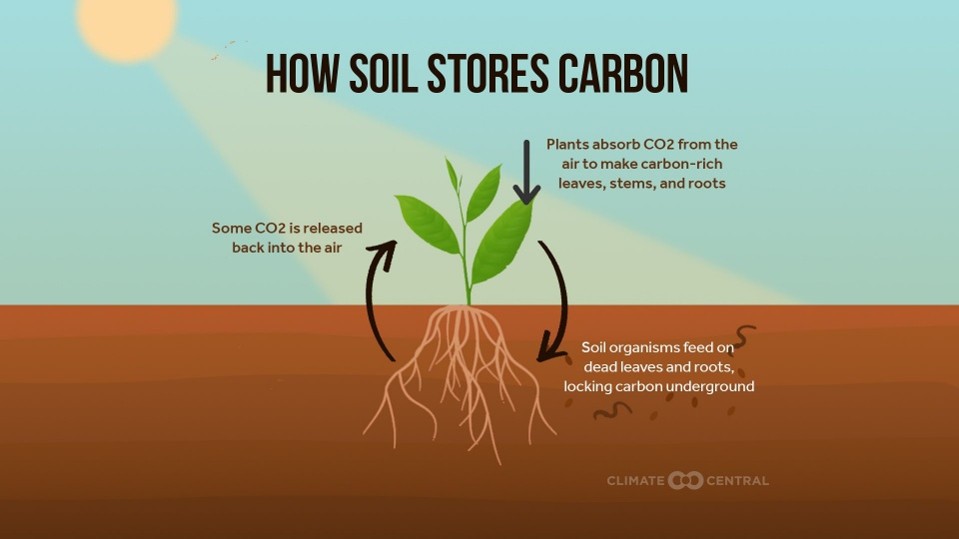
Figure 1: A simplified carbon cycle highlighting the importance of soil organisms in storing carbon underground.
Researchers in the Czech Republic explored how farming practices affect soil carbon over a 20-year period in a study published in the Open Access journal Agronomy. They compared different tillage practices in agriculture and the impact of mechanical manipulation of soil on carbon content and crop yield. The study found that:
- No tillage systems stored the most carbon.
- Reduced tillage produced the highest crop yields.
The findings reflect a broader idea in agroecology: the more we manage soil like a natural ecosystem, the better it functions ecologically, but this doesn’t always maximise crop production. Finding the correct balance between the two will be increasingly important as soil conservation becomes a major global aim.
Nitrogen cycle
Nitrogen is essential for plant growth, forming parts of proteins, DNA, and chlorophyll, the green pigment that is vital for photosynthesis.
Most nitrogen becomes available to plants through nitrogen fixation, a process carried out by bacteria such as Rhizobium and Azotobacter. These microbes convert nitrogen gas from the air into forms plants can absorb.

Figure 2: This figure depicts the importance of the soil ecosystem on the Nitrogen cycle and how it converts atmospheric nitrogen into forms more available to plants for uptake through their roots.
A very small amount of nitrogen is fixed into the soil through lightning, but without microbes, plants would struggle to access the nitrogen they need.
Phosphorus cycle
Phosphorus plays a key role in DNA, RNA, and cellular energy (ATP).
Unlike carbon and nitrogen, phosphorus lacks any significant gaseous phase and mainly comes from weathering of rocks. Only a small fraction is available to plants at any time.
Microorganisms solve this problem. Certain species can convert phosphorus into forms that plants can absorb, improving soil fertility and crop yield.
A review article published in the Open Access journal Plants highlights the potential of microbial inoculants in the soil as replacement of chemical fertilisers, which pose their own environmental concerns.

Figure 3: The key role of microbes in enabling plant uptake of fertiliser-derived phosphorus. Poor microbial utilisation can lead to phosphorus leaching and harm surrounding ecosystems. Pi denotes plant-available inorganic phosphorus, TP (total phosphorus) indicates that increasing soil phosphorus leads to more being bound to metals and rendered inaccessible.
Disruption to soil ecosystems poses significant threats to the balance and productivity of biogeochemical cycles. Awareness of these processes can enable the development of more sustainable practices to protect them in the long term. The future of the soil depends on our ability to understand and manage these microbial-driven cycles.
How soil microbes build stable soil structure
Beyond nutrient cycling, microbes also shape the physical structure of soil.
Soil is made up of aggregates, small clusters of particles that constantly form and break apart. Microorganisms play a key role in this process. Fungal hyphae act like threads that hold particles together, while some species produce sticky substances (such as glomalin) that strengthen these aggregates.
Stable soil is essential. It improves water retention, supports nutrient cycling, reduces erosion, and creates a better environment for both plant roots and microbial life.
The way we manage soil matters, sustainable farming practices can support microbial life and help maintain stable soil structure.
A review article published in the Open Access journal Agriculture discusses the current understanding of mechanisms that govern aggregate formation and stability. It highlights that aggregate stability is improved by the presence of microorganisms in the soil, and in turn, highly stable aggregates provide stable ecosystems for the same microbial life to survive. The result is that microbial life and soil stability are highly interconnected features.
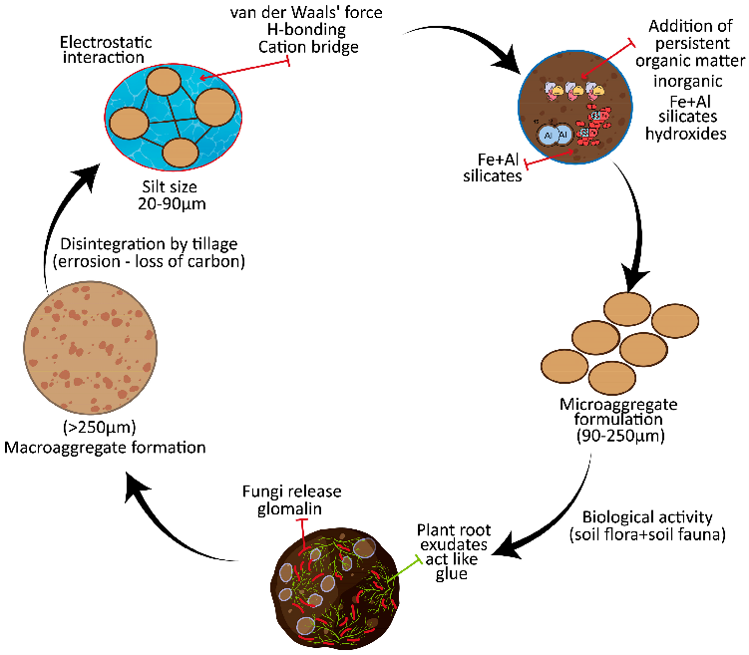
Figure 4: A schematic diagram highlighting the dynamic balance between aggregate formation and breakdown that regulates soil structure.
How modern farming practices impact soil life
The way we manage soil has a huge impact on microbial communities, and because these communities are so important, disrupting them directly affects soil health and crop productivity.
Continuous cropping and soil decline
Continuous cropping refers to the practice of growing the same crop on the same land repeatedly. Very often, this leads to declines in crop growth, yield, and quality.
Researchers in China assessed the effect of continuous cropping of patchouli on bacterial communities in the soil. In the short term, continuous cropping can enhance nutrient availability and promote microbial activity. However, its long-term effects are largely negative, causing soil acidification and disrupting beneficial microbial balance, which threatens soil health and sustainability.
Maintaining balanced microbial communities is therefore essential for sustaining soil health. Developing sustainable alternatives to current practices will be key to maintaining global soil fertility.
Fertiliser use and sustainable alternatives
Fertilisers can increase crop yields, but they have drawbacks. Overuse can harm microbial communities.
Excess nutrient application also promotes leaching, contributing to eutrophication and harmful algae blooms in aquatic ecosystems. Additionally, key inputs such as phosphorus are mined from rocks in the soil and are considered finite, non-renewable resources. Therefore, the long-term use of chemical fertilisers is unsustainable.
A 20-year long-term experiment, conducted by researchers in Hungary, explored effects of sewage sludge compost as an alternative. It showed several benefits:
- Increase in soil pH (less acidic).
- More organic matter.
- Higher nitrogen and phosphorus levels.
- Increased enzyme activity.
The conclusions of this work are limited as the overall microbial community composition was not studied, although there is evidence that organic matter addition to soil does have positive effects on microbial communities.
A better understanding of how what we put in the soil affects the life within it will allow for the planning and implementation of more sustainable soil practices.
The importance of protecting the soil microbiome
The soil microbiome is vital for soil health, supporting nutrient cycling, carbon storage, and plant productivity.
While intensive agricultural practices can boost short-term yields, they often disrupt microbial balance and degrade soil over time. At least a third of Earth’s surface soil has been affected by some form of degradation, which can reduce fertility and threaten long-term sustainability.
Protecting soil health means finding a balance, supporting agricultural productivity while maintaining the complex microbial systems that enable healthy soil.
Future research should focus on developing sustainable soil management strategies that work with soil for different land uses to preserve microbial activity and ensure long-term soil health.
More insights into different aspects of soil science can be found in Exploring the Field: Soil Science.
Studies on soil health and its applications in agriculture can be found across the portfolio of MDPI journals covering Environmental and Earth Sciences.
Alternatively, you can access the full MDPI journal list here.