

Sea Turtles Produce Less Eggs in Response to a Warming Ocean
Climate research continues to reveal the impacts of a warming planet. These changes are often prominent, like the rise in frequency of natural disasters, ranging from destructive hurricanes to devastating forest fires. Rising temperatures may also present as more subtle shifts in the normal functioning of the ecosystem, such as changes in animal behaviours.
A 17-yearlong study published in Animals by researchers from the Queen Mary University of London and conservationists from NGO Associação Projeto Biodiversidade showed that rising ocean temperatures are affecting breeding behaviours of loggerhead turtles.
The ocean is a heat reservoir
Large quantities of heat are absorbed by the ocean, which is described as the ‘largest solar energy collector’. The heat absorbed is also obtained from clouds, water vapor and greenhouse gases. It is then stored within the ocean over long periods of time and can be released into the atmosphere over a given timespan.
The ocean usually has a remarkable ability of keeping its temperature relatively stable despite its heat-storing capabilities. However, the ocean is now absorbing more heat than it releases over time, causing a significant rise in oceanic temperatures as well as global sea levels as water expands. These rising temperatures have been recognised by recording the ocean’s heat content within the last 5 decades.
As temperature is a key factor that affects vital physiological processes in many species, the warming of the ocean has significant impacts on animal behaviour. This includes breeding behaviours in oceanic creatures like the loggerhead turtle.
Turtles adapt to a warming ocean
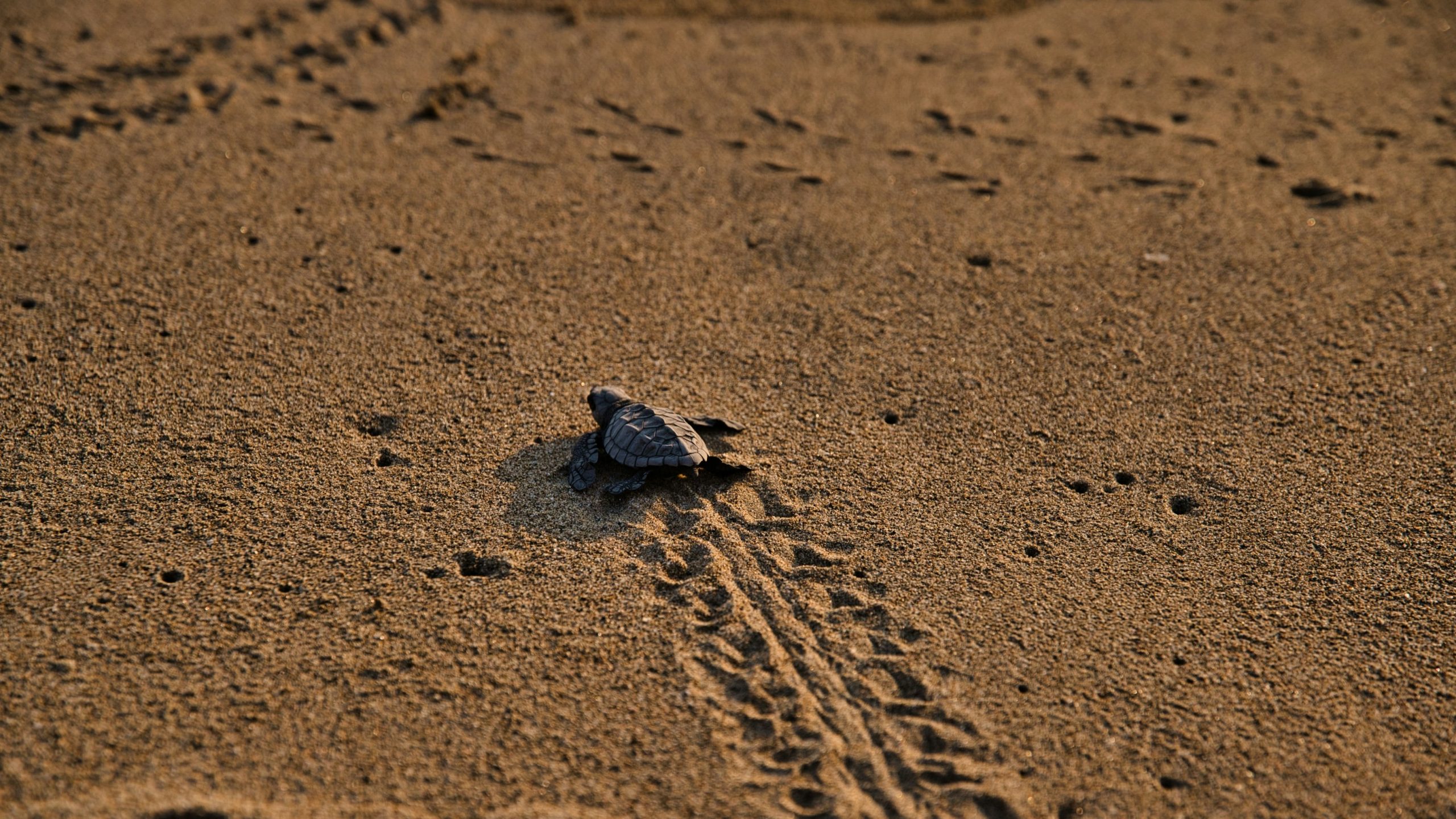
The loggerhead turtle is a type of sea turtle found in the Atlantic Ocean. They reproduce by mating in the ocean and laying their eggs on nesting beaches. The turtles return to the same beach each nesting season.
The study here analysed the breeding behaviours of loggerhead turtles on Sal Island, Republic of Cabo Verde, between 2008 and 2024.
Like many aspects of the ecosystem, animals display a surprising resilience to change through their ability to adjust to warming temperatures. The researchers found that in response to the rising temperatures, the turtles leave the ocean and nest on beaches for breeding seasons earlier in the season than usual.
“Sea turtles are adjusting their timing to warmer temperatures, which shows a remarkable capacity for flexibility. But at the same time, the parts of the Atlantic Ocean they depend on for food are becoming less productive – and that is quietly eroding their reproductive output.” – says Fitra Nugraha, lead author of the study.
Furthermore, the study results show that warming temperatures are forcing turtles to shift their breeding habits and take longer intervals between periods of breeding, rising from 2 to 4 years across a 17-year timespan.
The cost of a dwindling feeding ground
Sea turtles rely on obtaining enough food throughout their time in the ocean for energy to reproduce. Temperature changes in the ocean directly impact and rewire food webs, reducing ocean productivity and food availability. This reduction in productivity increases the timespan of intervals between nesting, as they need longer to obtain enough food.
“Temperature alone doesn’t tell the full story. You must protect sea turtles on the nesting beaches, but not only.
What happens thousands of kilometres away, in their feeding grounds, directly determines how many eggs they can produce and therefore the next generation of turtles.” – Christophe Eizaguirre, author of the study and professor of Evolutionary and Conservation Genetics.
Therefore, despite turtles nesting earlier, female loggerheads are taking longer to return to their natal nesting beaches and bringing smaller clutch sizes with them – this refers to the number of eggs they lay in a single nesting attempt. The study also showed a decrease in clutch frequency – this refers to the number of nests produced in that one season.
Learning about turtle breeding is essential for conservation
Continuous research is essential to understand the impact that climate change has on our planet, including its impact on breeding. Rising temperatures remains a significant threat to marine life. However, understanding the intricacies of how it affects ecosystems requires more long-term observational studies, like the one demonstrated here.
This new research presents important and novel findings on the breeding behaviours of loggerhead sea turtles due to rising temperatures. It highlights the need for better conservation strategies to extend beyond nesting beaches, but also to protect coastal feeding environments within the ocean.
Future research would focus on continuous monitoring from conservationists, as well as developing strategies to best mitigate the changes induced by an ever-warming planet.
MDPI publishes Open Access research across a wide range of topics, including climate conservation, and marine sciences. You can read more in the Journal of Marine Science and Engineering, Oceans, Climate and Animals. You can also access the full list of MDPI’s Journals, where all articles are free to read immediately.