

What is the Institutional Dashboard (IOAP Dashboard)
MDPI SuSy (Submission System) is MDPI’s end‑to‑end platform for managing the entire manuscript lifecycle, from initial submission to final publication. It includes a specialised Institutional Dashboard designed for universities, libraries, and research organisations participating in MDPI’s Institutional Open Access Program (IOAP).
In this article, we’ll explain how SuSy works, what it contains, and how institutions use it to streamline academic publishing, support institutional memberships, and empower research communities.
MDPI’s SuSy explained
SuSy is MDPI’s online submission system, used by authors, reviewers, editors, and institutions to manage all publishing workflows. It centralises manuscript submission, peer review, editorial decisions, APC (Article Processing Charge) management, and institutional oversight.
For institutions enrolled in the IOAP, SuSy provides librarians and research administrators with insight into their publishing activity and simplifies APC management.
The Institutional Dashboard is the part of SuSy designed specifically for organisations participating in the IOAP. It gives administrative staff a clear, real‑time view of publishing activity linked to their institution, helping them track submissions, monitor affiliated authors, and manage APCs with far less manual effort.
Core functions
Several core functions help institutions manage their OA output. These are:
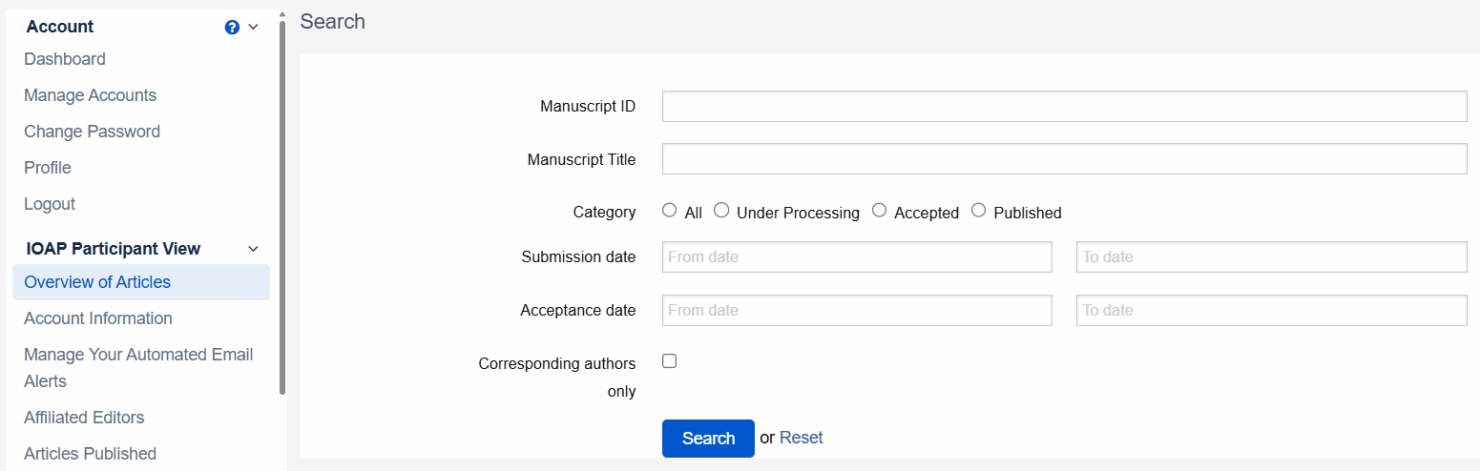
Article monitoring
This section displays all manuscripts submitted by authors who list the institution as their affiliation. Administrators can see the full status history, including submitted, under review, accepted, or published, along with DOIs and export options.
Through the dashboard, institutions can visualise publication performance through summary charts, enabling them to track faculty involvement and key publication metrics such as total downloads, citations and views.
For institutions with active research communities, this is a central hub for understanding publishing trends and supporting Open Access compliance.
Traffic monitoring
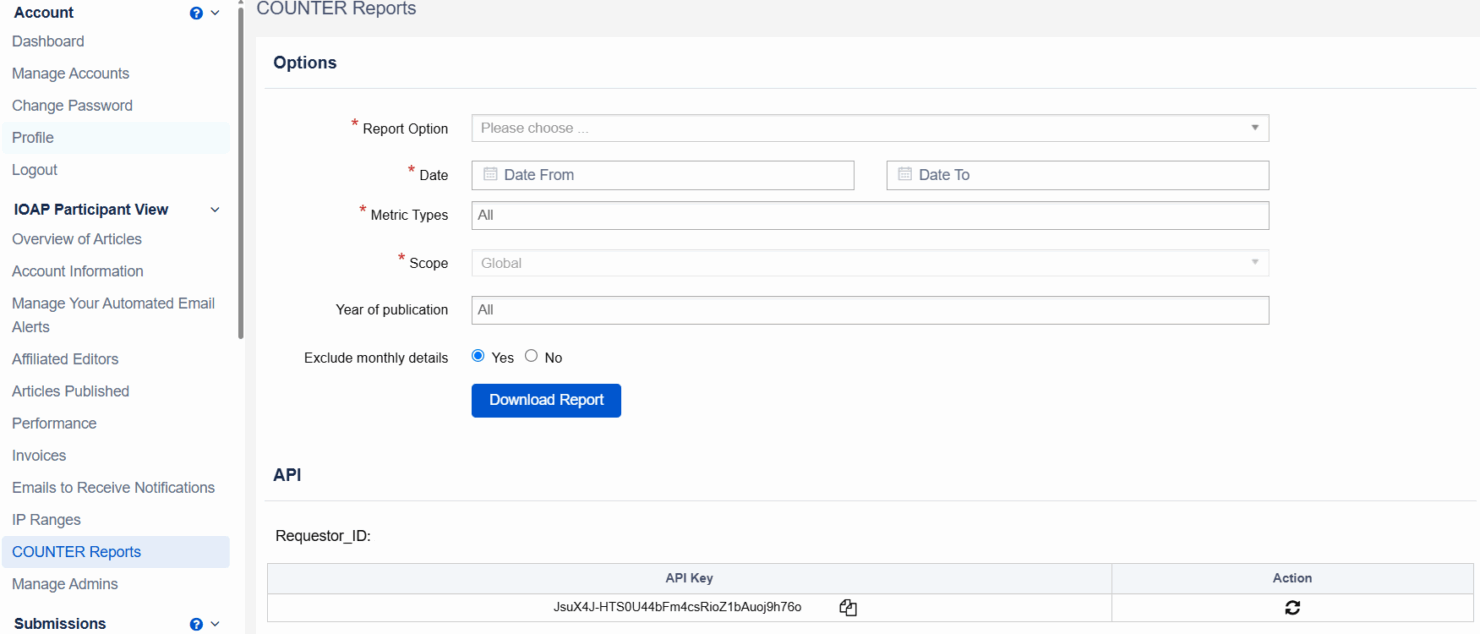
Since 2025, MDPI has also been COUNTER compliant. This enhancement allows institutional partners to track and download COUNTER Release 5.1-compliant reports directly from the dashboard across various metric types. Alternatively, institutions may use their existing APIs to harvest usage data directly from the COUNTER database.
Central billing management
The dashboard shows APC eligibility for each paper. Institutions can confirm or decline central billing, and a green indicator highlights confirmed eligibility.
Because APCs are a major component of OA publishing, this feature significantly reduces administrative burden and ensures transparency for finance teams and library services. Institutions that have opted for central invoicing can manage all invoices centrally directly on the dashboard.
Affiliated editors
Institutions can view editors from their organisation who serve on MDPI’s Editorial Boards or act as Guest Editors for Special Issues. This information can support internal recognition, annual reporting, and highlighting editorial contributions within academic departments.
Email alerts
Administrators can configure and manage email alerts for new submissions, acceptances, or publications. This lets them control how and when they receive dashboard updates.
User profile controls
Institutional representatives can update contact details, preferences, and access permissions. For institutions with multiple staff members managing IOAP activity, SuSy supports flexible user access arrangements.
Exportable data
SuSy provides exportable data for publication counts, submission trends, APC totals, author activity, and editor involvement, allowing institutions to analyse and generate customised reports. Institutions can use this data for internal reporting and tracking Open Access compliance.
For organisations committed to empowering research, these analytics offer a clear picture of publishing output and help demonstrate the value of institutional memberships.
How SuSy’s submission system works
Understanding the author workflow helps explain what data appears in the Institutional Dashboard and why it matters for academic publishing. The process involves several key stages:
- Authors submit their manuscripts through SuSy and indicate their institutional affiliation.
- SuSy automatically connects the submission to the institution’s dashboard, giving librarians and administrators immediate visibility.
- Once a manuscript is accepted, the corresponding institution receives APC billing under the IOAP agreement.
- Institutions under the central workflow can approve or reject APC coverage, with billing consolidated for easier processing.
For institutional partners, SuSy automates APC handling, simplifies financial management and supports Open Access goals. This automation is particularly valuable for institutions managing large volumes of OA publications.
For librarians and administrative staff, SuSy provides a streamlined, transparent workflow. This makes it easier to monitor, manage and report on institutional activity.
Why the Institutional Dashboard matters
SuSy is essential to MDPI’s publishing model because it streamlines OA administration, provides transparency, reduces manual APC handling, and helps universities track research output.
For organisations participating in the IOAP, it serves as a comprehensive toolset that supports academic publishing, strengthens institutional memberships, and ultimately empowers research communities by making Open Access publishing easier to manage.
Explore your institution’s SuSy dashboard to see how submissions and APCs are being managed in real time.