
A Closer Look at the Safety of Brazil Nuts
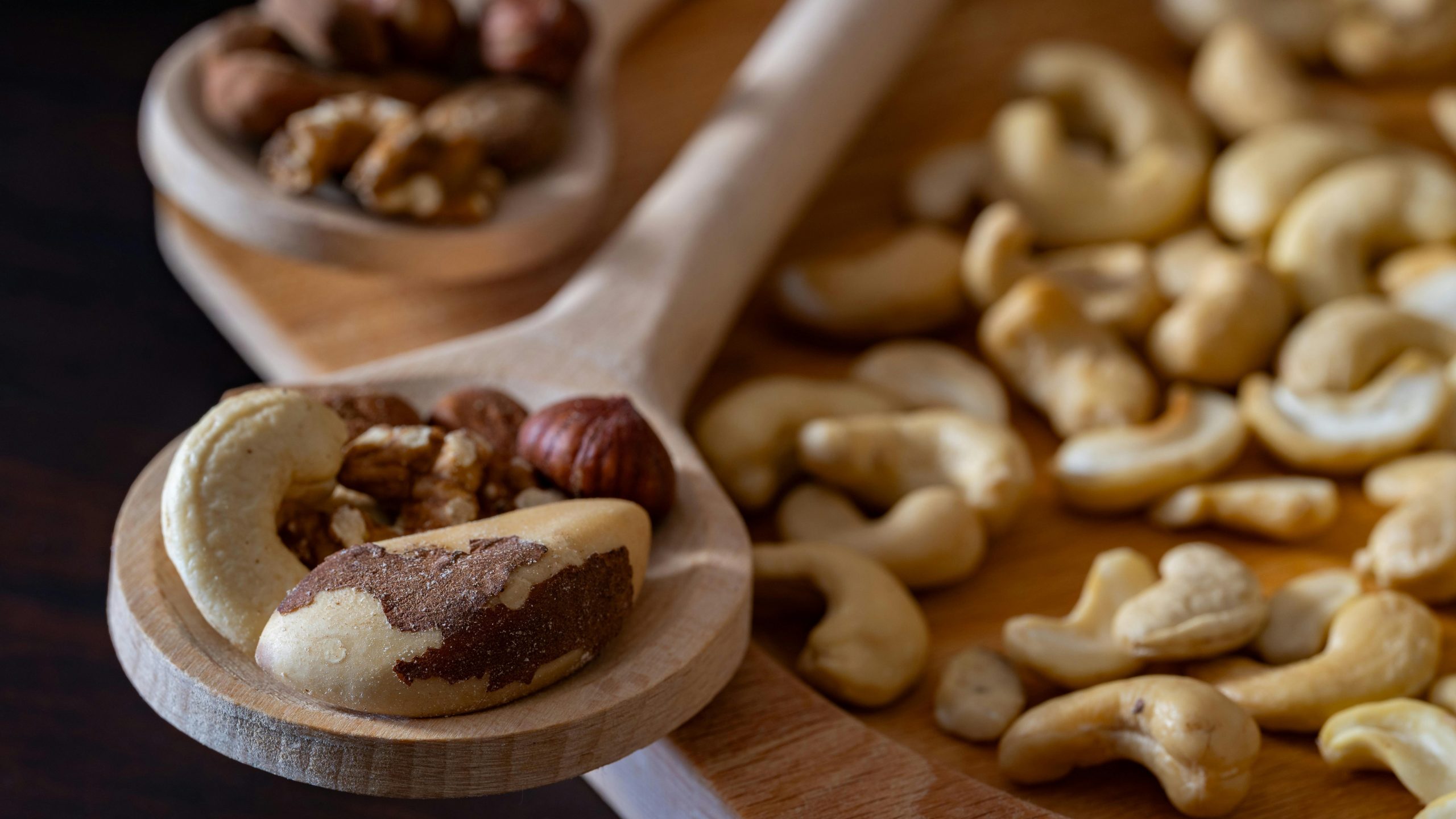
Nuts are an excellent source of polyunsaturated healthy fats, fibre and vitamins. The nutritional profile of Brazil nuts has been established in previous research, highlighting the substantial concentration of the essential trace mineral selenium.
However, it has also highlighted the toxicity of their consumption in large quantities due to the presence of toxic elements such as barium and radioactive radium, as well as the risk of being exposed to excessive levels of selenium.
Recent research published in the Open Access journal International Journal of Molecular Sciences by researchers from the Institute of Resource Ecology, Germany, quantified the concentration of selenium, and potentially harmful elements such as strontium, europium, and lanthanum in Brazil nuts.
The study also takes it one step further and analysed the in vitro bio accessibility of these elements in the nuts. This refers to the maximum ability of an element or compound to be intestinally absorbed during digestion from food or liquid consumed.
Selenium in Brazil nuts
Brazil nuts can be an immensely nutrient-rich food choice. They are packed with elements such as calcium and magnesium and are described as ‘selenium bombs’ due to their high concentration of the essential mineral.
Selenium is a critical trace element involved in biological processes and systems, such as DNA synthesis, immunity, thyroid regulation, protection against oxidative stress, and cardiovascular protection. Therefore, it plays an important role in maintaining health and biological functions.
However, there is a narrow window of healthy selenium intake, as excessive ingestion of selenium can lead to selenium toxicity. This is referred to as selenosis, or acute selenium poisoning, which has previously occurred in individuals who consumed selenium supplements above the recommended dose. Too much selenium can cause nausea, hair loss, and irritability, amongst other symptoms.
The recommended daily requirement sits at 55–60 micrograms, with a single Brazil nut covering this recommendation. Other foods rich in selenium include fish, beef, beans, lentils, and other types of nuts.
Alongside quantifying the high concentration of selenium, the study shows how much of the element is actually absorbed from Brazil nuts during digestion:
“Our study confirms the extremely high selenium content in Brazil nuts. At the same time, we were also able to show that around 85 percent of the selenium is released during digestion and can then be taken up by the body.” – Dr. Astrid Barkleit, Institute of Resource Ecology.
Using nuclear magnetic resonance (NMR) spectroscopy, the researchers found that the selenium in the nuts existed in a form called selenomethionine, a compound rapidly absorbed by the body, making it an excellent source of selenium.
The researchers also analysed certain components within the Brazil nuts that could be hazardous if consumed in high concentrations.
Barium and radium exhibit low bio accessibility in Brazil nuts
Originating from South American rainforests, Brazil nut trees grow in soil which may contain high levels of elements such as barium. Researchers confirmed these high levels of barium and radium in the Brazil nuts – elements that can both be highly toxic if consumed in excess.
Barium toxicity is rare, but can cause gastric pain, vomiting and, in extreme cases, can be life threatening. Radium is a radioactive compound and while not enough data is available to determine the amount and duration of radium that causes negative health effects, long-term exposure can cause significant harm, including cancer, anaemia and fractured teeth.
Upon further analysis of the bio accessibility of these elements, the researchers found that, unlike selenium, the majority of the barium and radium present in Brazil nuts is not absorbed by the body during the digestive process.
Only 2% of the barium was absorbed, while a similarly low percentage was seen with the radium; the rest is simply passed through the digestive tract and was not absorbed by the body. This is potentially due to the nature of the elements and how they bind to other compounds limiting their absorption. For instance, barium in Brazil nuts is bound to a compound called phytate, which prevents intestinal absorption.
Daily exposure to Brazil nuts unlikely to cause harm
The researchers of the study compared the results obtained from NMR spectroscopy and compared them against the annual exposure of radiation to the German population.
Dr. Diana Walther from VKTA – Radiation Protection, Analytics & Disposal Rossendorf Inc, explains this comparison and how it shows that exposure to Brazil nuts, even on a daily basis, is unlikely to cause damage, despite the presence of radioactive trace elements:
“The calculations show that, due to the very low bioavailability, a daily consumption of one Brazil nut would result in a radiation dose of about 2.4 microsieverts per year.
That is only about a thousandth of the natural annual radiation exposure in Germany which is given to 2.1 millisieverts per year on average by the Federal Office for Radiation Protection. Of this, about ten percent are ingested with food.
Therefore, the radiation exposure caused by radium in Brazil nuts is significantly less than previously assumed.”
Furthermore, the researchers used de-corporation agents to see if Brazil nuts would impact their efficacy. Decorporation agents are compounds which can remove radioactive substances from the body, such as if contamination occurs. They found that the efficacy of these agents was not altered by the composition of Brazil nuts.
Bioavailability studies are important for food risk evaluation
The study presents novel data on the nutritional profile of Brazil nuts, specifically the bio availability of selenium and potentially toxic elements such as radium and barium.
The researchers discovered that the bioavailability of these elements within the Brazil nut differ drastically, most likely due to how they are bound to other elements and compounds. With the majority of the selenium absorbed by the body, while toxic components like barium and radioactive radium being excreted during digestion, Brazil nuts remain an excellent and nutritious choice of food.
“Our results confirm that Brazil nuts are a valuable food – especially as a natural source of selenium,” Barkleit summarizes. “At the same time, they show that, thanks to their low solubility, the potentially harmful elements they contain hardly affect the body when the nuts are consumed.”
Understanding the bioavailability of different elements within food is essential for food risk evaluation and food safety, and to keep consumers safe, particularly when foods are high in radioactive and potentially toxic compounds.
To see more research like this, access the journal IJMS or Nutrients. Alternatively, you can read more research across a variety of science topics published in MDPI’s Open Access journals.