
ISPRS International Journal of Geo-Information: Journal Spotlight
For our final Journal Spotlight of the year, we will be taking a closer look at ISPRS International Journal of Geo-Information (ISSN 2220-9964).
ISPRS International Journal of Geo-Information (IJGI) is an international, peer-reviewed, Open Access journal that provides an advanced forum for the science and technology of geographic information. It is the official journal of the International Society for Photogrammetry and Remote Sensing (ISPRS) and it is published online by MDPI.
Here, we cover the journal’s continued development and achievements which have contributed to its enduring impact.
Editor-in-Chief: Prof. Dr. Wolfgang Kainz
Current Impact Factor: 2.8
Current CiteScore: 7.2
Statistics as of December 2025.
A history of IJGI
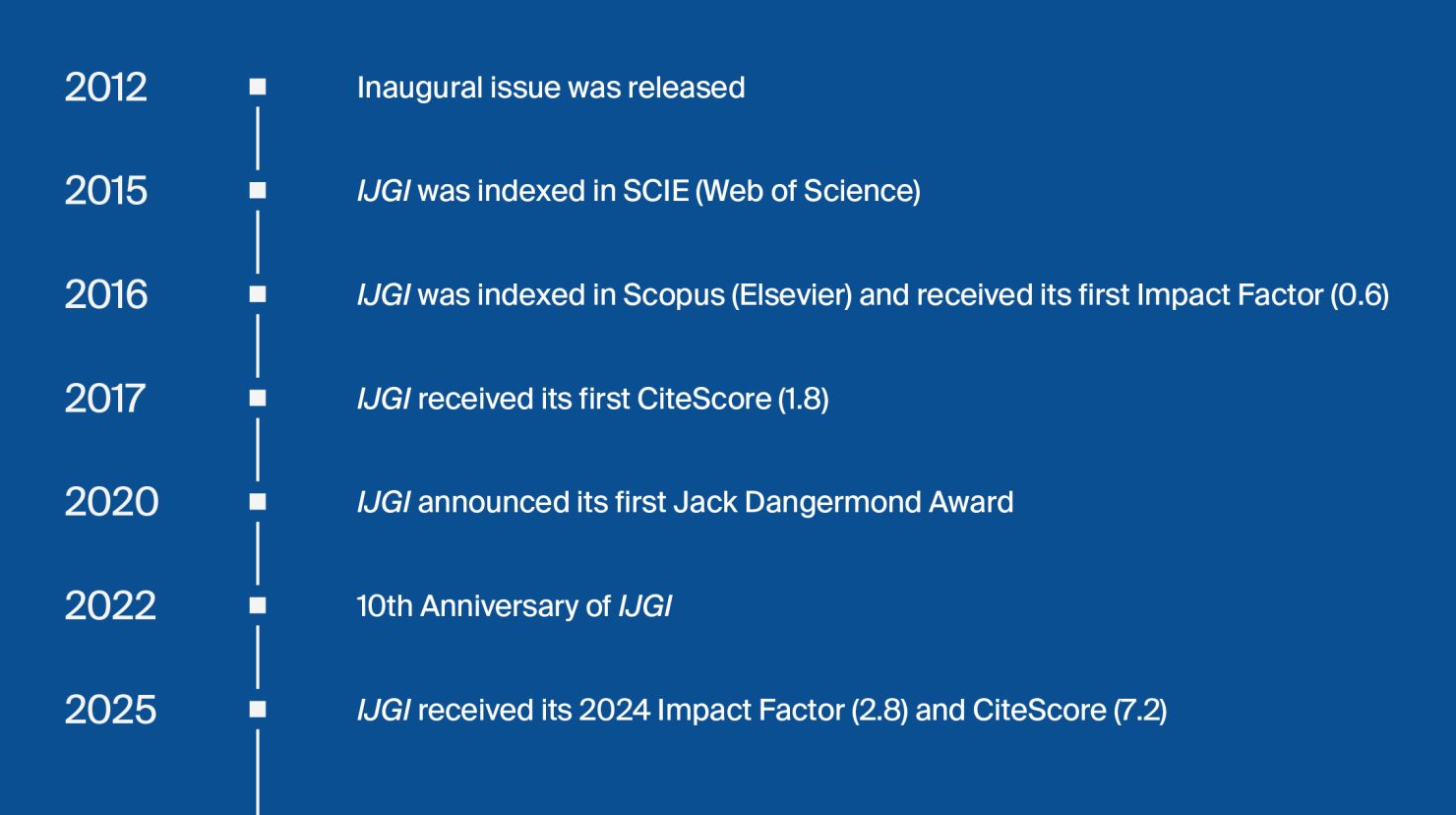
The inaugural issue of IJGI was published in 2012, marking the beginning of a prosperous endeavour for both MDPI and ISPRS. Now more than 13 years old, the journal has been led since its inception by its Editor-in-Chief (EiC), Prof. Dr. Wolfgang Kainz.
A Professor at the University of Vienna, Prof. Dr. Wolfgang Kainz’s long-term leadership continues to play a central role in shaping the journal’s academic success. He has held various teaching positions around the world, including in the United States, Brazil, Kuwait, Qatar, China, and more.

Professor Dr. Wolfgang Kainz, EiC (2011–current)
In 2015, the journal was indexed in SCIE (Web of Science), signalling its growing impact and relevance within the field of geo-sciences. IJGI would continue to boost its visibility in the following year, becoming indexed in Scopus (Elsevier).
By 2020, the journal had achieved steady growth across key metrics (Impact Factor and CiteScore) and strengthened its engagement with its scholarly community. Also, the journal announced its first Jack Dangermond Award, honoring the contributions of Jack Dangermond; a leader in geo-information technology systems.
The second edition of the Jack Dangermond Award followed in 2022, coinciding with the journal’s 10th anniversary.
Aims and scope
Geo-information research allows scholars to examine how spatial and temporal data about our world is visualised, understood, and maintained. It works to highlight and provide solutions for major scientific and societal challenges such as environmental change and disaster response, spatial data uncertainty, and the analysis of complex geospatial datasets.
“We live in a globalized world and the scientific exchange among people from all countries […] is of utmost importance when we want to tackle the global problems we face today and will face in the future. My wish is to stimulate such exchange by providing this platform for high-quality papers.” – Dr. Wolfgang Kainz, Editor-in- Chief.
IJGI welcomes contributions on topics such as data collection and management, spatial data modelling and algorithms, spatio-temporal databases, cartography, and more.
Research focused solely on remote sensing, photogrammetry, global navigation satellite systems, geodesy, or geosciences and earth sciences does not fall into the scope of IJGI. The journal’s homepage outlines that submissions on applications within these disciplines may be accepted, but only when the content features a topic outlined in the journal’s scope.
The journal’s scope can be found here.
Journal metrics
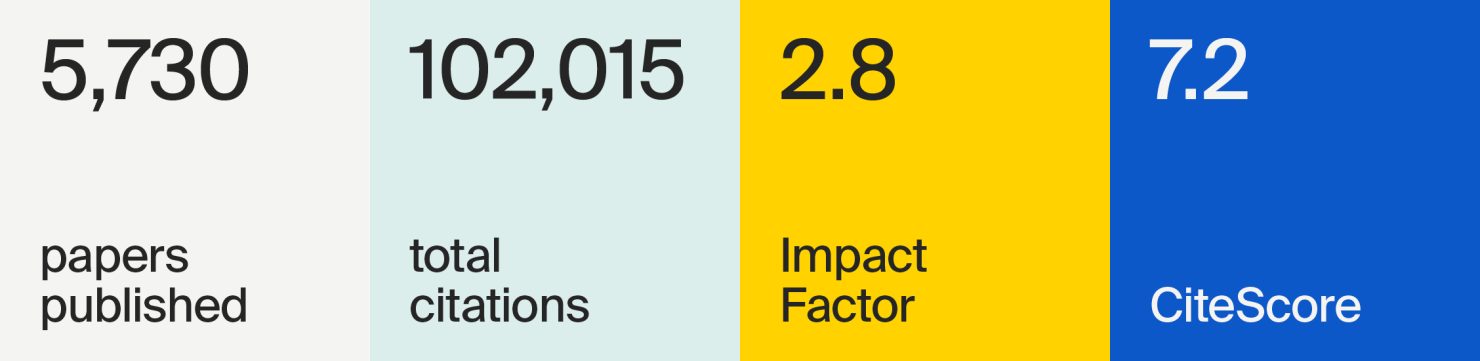
As of December 2025, IJGI has published over 5,700 papers with over 2,900 of these being cited 10 times or more. The IJGI publication with the most citations is a review entitled ‘Applications of 3D City Models: State of the Art Review’ by Filip Biljecki, Jantien Stoter, Hugo Ledoux, Sisi Zlatanova, and Arzu Çöltekin.
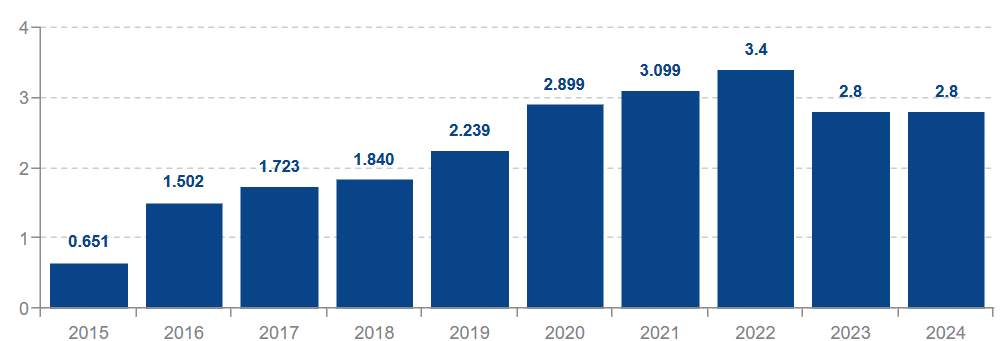
First receiving an Impact Factor of 0.6 in 2016, the journal has steadily grown and currently holds an Impact Factor of 2.8.
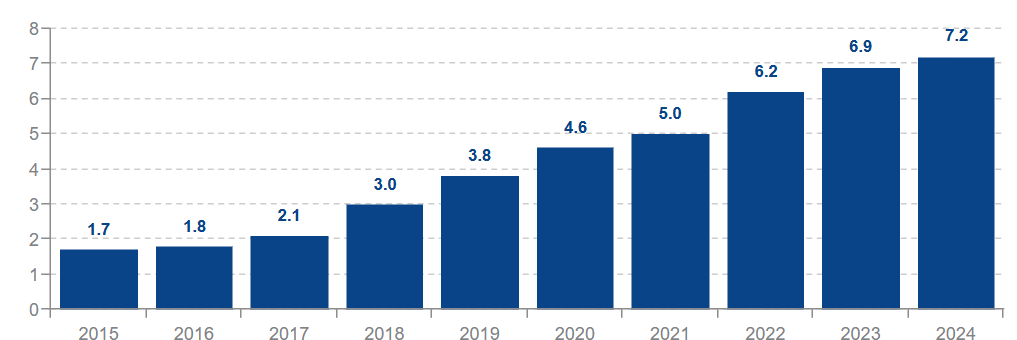
Further, IJGI’s 2024 CiteScore sits at an impressive 7.2, building from a CiteScore of 6.9 for 2023, and 6.2 for 2022. Indicative of the journal’s prevalence amongst existing literature, the journal ranks in Q1 for three different CiteScore rankings: ‘Earth and Planetary Sciences’, ‘Geography, Planning and Development’ and ‘Computers in Earth Sciences’.
Indexing can similarly suggest a journal’s quality and IJGI is featured across various indexing services. In addition to Scopus (Elsevier) and Journal Citation Report (JCR, Clarivate), it is indexed within DOAJ, OpenAIRE, J-Gate, GeoRef, and more.
See the full list of indexing services here.
Altmetrics
When understanding a journal’s impact, looking beyond scholarly metrics helps us to further uncover the societal relevance of its research. As of December 2025, IJGI has received 9,484 mentions across social media, 282 mentions across news platforms and blogs, and 410 mentions across policy, patents and guidelines.
The IJGI community
Through MDPI’s and ISPRS’s collaboration, ISPRS International Journal of Geo-Information (IJGI) is committed to fostering positive relationships with the academic community it serves.
Success through collaboration
The journal was born as part of a joint initiative between the ISPRS and MDPI. The International Society for Photogrammetry and Remote Sensing is a non-governmental organization devoted to the development of international cooperation for the advancement of photogrammetry and remote sensing and their applications.
The partnership leverages ISPRS’s expertise in geo-spatial information with the benefits of MDPI’s Open Access publishing model. Together, they provide authors with an efficient peer review process, unrestricted global access to research, and boosted visibility and citations for its authors.
If you are a member of ISPRS, you can receive discounts on the article processing charges (APCs) when publishing in the journal.
MDPI journal awards
MDPI offers a diverse awards program, allowing journals to give back to their academic community.
The nomination deadline for IJGI’s Young Investigator Award is 28 February 2026. Also, the winners of their Outstanding Reviewer and Travel Awards for 2025 are set to be announced early in 2026.
Learn more about IJGI’s awards and their recent winners here. Alternatively, you can read our article covering MDPI’s Award program, which details important eligibility requirements.
Jack Dangermond Award
The Jack Dangermond Award is sponsored by MDPI in collaboration with the Environmental Systems Research Institute (ESRI). The award was established to promote and advertise the ISPRS International Journal of Geo-information (IJGI) and honor the outstanding contributions of the ESRI President, Jack Dangermond.
Jack Dangermond is known for his profound impact on the field of geographic information system (GIS) technology, most notably the creation of cutting-edge GIS and Geodesign technologies, which are used globally.
The Jack Dangermond Award is presented every four years to outstanding papers exploring topics within the scope of the journal. Winners receive a grant of 10,000 USD and an ISPRS certificate.
Click here for details on eligibility and the selection process provided by the ISPRS.
Partner conferences
The International Society for Photogrammetry and Remote Sensing ISPRS 2026 Congress will take place across 4–11 July 2026, in Toronto, Canada.

The event will bring together leading experts, researchers, and industry professionals to explore the latest advancements and innovations in photogrammetry, remote sensing, and spatial information sciences.
Celebrating 116 years of international cooperation, the event will highlight cutting-edge research, industry best practices, and discuss pressing challenges facing the field. Attendees should expect an extensive program of keynote speakers, technical sessions, workshops, and more. The event is also set to provide invaluable networking opportunities, allowing participants to connect with a diverse selection of individuals from various specialisms.
For more information, visit the ISPRS 2026 Congress page, or visit the journal’s homepage.
Testimonials
“Publishing with MDPI was an easy, outstanding, timely, and thorough experience.” – Timothy Nyerges, Author for IJGI.
“My experience reviewing for MDPI was highly positive. The platform is outstanding. The process featured excellent communication at every stage and was clearly defined with comprehensive and clear instructions.” – Vassilis Andronis, reviewer for IJGI.
Submitting a manuscript
Manuscripts for IJGI should be submitted online at susy.mdpi.com. Prior to submitting, we recommend that authors explore the useful resources on our author guidelines webpage.
The submitting author, who is generally the corresponding author, is responsible for the manuscript during the submission and peer review process.
To submit your manuscript, register and login to the submission website. Once you have registered, click here to go to the submission form. All co-authors can see the manuscript details in the submission system if they register and login using the e-mail address provided during manuscript submission.
If you’d like to find out more about IJGI and its publication process, please visit the journal website.
Information for societies
MDPI currently supports more than 200 learned societies and organisations ranging from affiliations to publishing journals on behalf of the society.
Visit our societies page to learn more about the services MDPI provides, as well as a full list of MDPI’s Society Journals.
Stay up to date with IJGI on social media