
Platelets Provide Insight into Therapies to Improve Sickle Cell Disease Complications.
Sickle cell disease (SCD) is a serious inherited blood disorder.
The World Health Organisation (WHO) estimates that in 2021 there were 7.74 million people living with sickle-cell disease globally, with 515,000 babies born with the disease, primarily in sub-Saharan Africa, which accounts for nearly 80% of global cases.
SCD is caused by a mutation in the HBB gene, which is responsible for the production of haemoglobin in red blood cells or erythrocytes. The mutation results in the malformation of erythrocytes, causing them to form a crescent instead of their typical round, flat shape. This prevents them from carrying oxygen around the body efficiently.
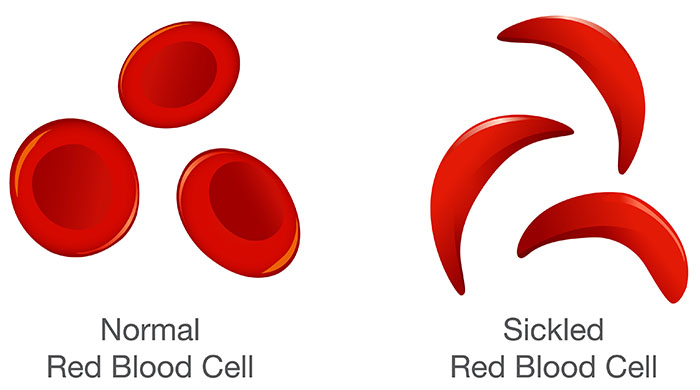
Chronic pain is a major complication of sickle cell disease, as the unique sickle shape of the erythrocytes can cause blockages to blood vessels resulting in ischemic tissue damage and vaso-occulsion crisis , leading to peripheral and nervous system damage and neurocognitive impairment. Because of this, pain in SCD is complex, multifaceted, and can be difficult to manage .
Recent research in neurodegenerative and chronic inflammatory disorders have uncovered that mitochondrial dysfunction, and cellular pathways are strongly linked to chronic pain phenotypes. Moreover, proteins involved in mitochondrial maintenance, electron transport, glutathione metabolism, aminoacyl-tRNA synthesis, and ubiquitin-mediated proteostasis have been implicated in neuronal vulnerability and persistent pain signaling. SCD has been shown to affect similar pathways, investigating these protein-protein interaction could further the understanding of mechanisms that may contribute to SCD pain.
A recent study in the Open Access journal Medical Sciences uses proteomics to study protein-protein interactions and identify biomarkers and therapeutic targets for pain in SCD.
SCD and vaso-occlusive crisis
Haemoglobin is a protein inside erythrocytes which contains an iron molecule at its core (Fe2+/Fe3+) to bind oxygen, allowing it to carry and deliver oxygen around the body. The typical round, flat shape allows for a large surface area and flexibility to navigate around the body. SCD causes a mutation in the hemoglobin gene which alters the shape of erythrocytes in hypoxic conditions. This transforms them into rigid, sticky structures that are not as efficient at carrying and delivering oxygen around the body. Moreover, the irregular shape of the erythrocytes can amplify pain by blocking small blood vessels, cutting off blood flow to tissues; this is also known as vaso-occlusion.
Recurrent episodes of vaso-occlusion can result in a vaso-occlusive crisis, the most common complication of SCD. The blockage of blood vessels starves tissues of oxygen and vital nutrients, which can result in ischaemia, tissue hypoxia and organ damage. The chronic pain can affect any part of the body but commonly affects the limbs and the back. Moreover, it can also present as skeletal pain due to bone marrow ischaemia, which happens when blood flow to the bone marrow tissues is limited, irritating the nerve fibres.
Furthermore, recurrent episodes of vaso-occlusion can lead to cumulative injury, cultivating chronic pain, systemic inflammation and neurocognitive dysfunction.
Platelet’s role in SCD pain
Platelets are a crucial component of all blood cells; they are small, specialised cell fragments derived from bone marrow. They are central mediators of thromboinflammation, vascular signaling, oxidative stress, and coagulation. One of their main roles in the body is to prevent blood loss by binding to damaged blood vessels and clumping together to form a plug to block the injury site and prevent excessive bleeding. However, evidence shows that platelets have other complex roles and influences in the central and peripheral nervous systems, as they share biological similarities with neurons.
Platelets contain active mitochondria, responsible for energy production. Platelet mitochondria are sensitive to metabolic changes in the body, allowing them to sense and react to changes in the central and peripheral nervous systems. Platelets are complexly linked with neuronal processes and, because of their unique properties, can both support and negatively affect nervous system processes. Supportive processes include storing and transporting neurotransmitters and aiding repair when the central nervous system (CNS) is damaged. . However, they can also cause disruption of the blood-brain barrier and neuroinflammation. Platelet abnormalities and hyper-reactivity also contribute to the development of neurodegenerative diseases.
Because of platelets’ similarity to neurons and their intuitiveness to both the CNS and PNS, researchers predominantly from the University of Tennessee, USA, used proteomics to investigate potential SCD pain pathways and reveal possible biomarkers and therapeutic targets to alleviate SCD-associated pain.
Profiling SCD pain
The researchers recruited 16 SCD patients with severe to moderate SCD-related pain from the outpatient sickle cell clinic at Regional One Health (ROH) Hospital in Memphis, Tennessee. The participants were given pain questionnaires to complete and provide blood samples, which were separated into platelets and purified. They were then analysed using high-resolution mass spectrometry and grouped into high and low pain phenotypes using a machine learning technique known as unsupervised clustering. Unsupervised clustering can group unlabeled data points into clusters based on similarities and distance metrics.
Platelets can provide insight into SCD
The researchers identified 4,196 proteins within the patient samples and compared their prevalence among patients. These proteins provided insight into potential pain pathways in SCD while also demonstrating significant differences between low-pain and high-pain phenotype patients.
“This was a small pilot, so it’s too early to make any broad statements. But these findings do justify a wide range of follow-up investigations to figure out why we found these differences and whether they indicate potential strategies to reduce pain or create new treatments.” – Keesha Powell-Roach, lead author of study.
They identified significant differences in neurodegeneration, mitochondrial metabolism, ATP regulation, mitophagy, and tRNA aminoacylation pathways between high- and low-pain phenotypes. Moreover, the unsupervised clustering demonstrated that high-pain individuals exhibited elevated levels of proteins involved in proteostasis and neurodegenerative disease processes. Low-pain individuals showed increased expression of proteins linked to mitochondrial integrity, neuroprotection, and reduced oxidative stress.
The researchers note that their findings underscore the systemic nature of SCD. Moreover, they suggest that chronic pain in this population is driven by interconnected cellular stress responses that extend beyond acute vaso-occlusive events. The researchers explain that the links found between neurodegeneration and mitochondrial dysfunction pathways may contribute to oxidative stress and chronic pain in SCD.
Future of platelet-derived proteomics
The findings from the study demonstrate that mitochondrial and redox pathways could be promising targets for further biomarker development, supporting a model in which persistent bioenergetic failure and oxidative stress contribute to central sensitisation and chronic pain in SCD. However, they explain that there are limitations to the study due to the small sample size and single-point blood sampling. These limitations prevent researchers from understanding if differences in protein levels cause pain, are a result of the pain or are caused by other disease aspects.
Overall they note that these findings provide a foundation for future studies aimed at improving pain stratification and management in individuals with SCD. The authors suggest that future studies could build on these findings by incorporating longitudinal designs, targeted functional assays, and complementary clinical measures, including neurocognitive assessments and neuroimaging. Moreover, these studies should aim to directly link platelet-derived proteomic signatures with neurological outcomes and pain trajectories in larger SCD cohorts, including comparisons with healthy adults without pain and other pain conditions.
To learn more about sickle cell disease or proteomics, please see the Open Access journals Cells and Proteomes.
Alternatively, you can access MDPI’s full journal list, where all articles are free to read immediately.