
Ensuring Figure Quality: A Checklist for Authors
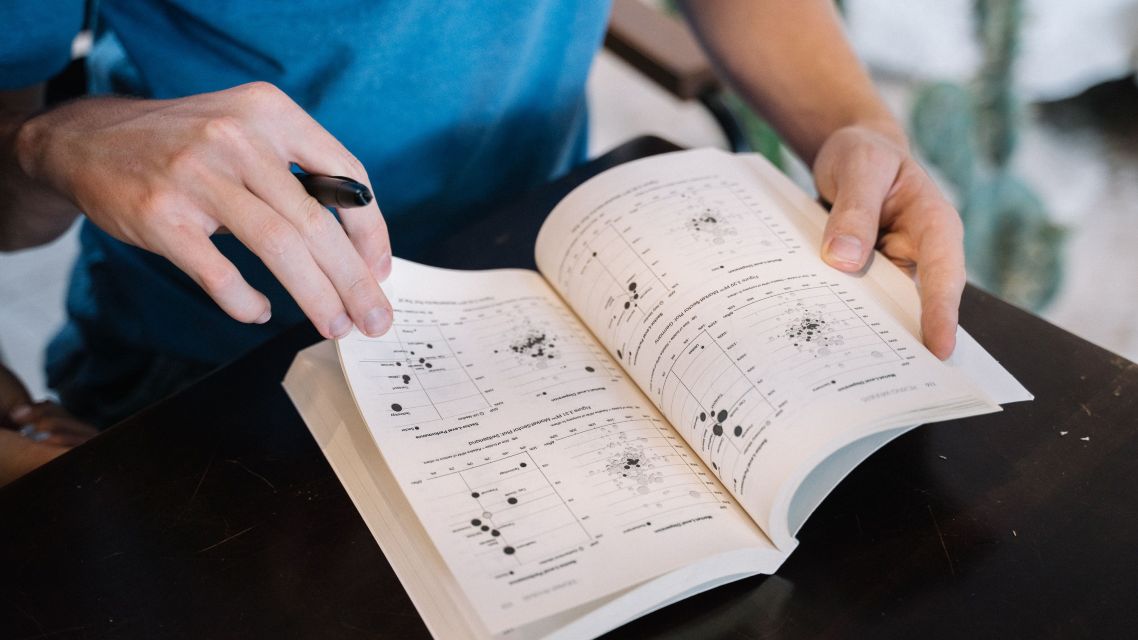
Figures are graphics that support the author’s main text. They may show data, an algorithm, a model, an image, or any other pictorial representation. Research figures help communicate key findings and effectively summarise complex information or data to other researchers and wider audiences. In a research landscape informed by current forms of media and visual consumption, figure quality is an increasingly important element of manuscript submission. The quality of your figures can play a large part in influencing the decision of journal editors and is one of the more immediate elements that stand out during the initial reading stage. Therefore, it is useful for authors to know how to ensure figure quality before going ahead with journal submission.
To give authors guidance, we’ve created a simple checklist to follow.
1. Resolution, format, and colour
First, your figures need to be in an accessible format and clear for both editors and readers. A sufficiently high resolution (preferably no less than 600 dpi or dots per inch) ensures that fine lines, data points, and small text are easy to read. It also means that any future print versions of your research manuscript look clean and therefore suitable for use at conferences, seminars, etc. Ensuring high-quality figure resolution maintains professional presentation of your work.
For how to format your figures, guidelines may vary depending on the journal, but MDPI recommends that all figures are provided in a single zip archive in PNG, JPEG, or TIFF formats.
Whether figures should be submitted in colour again depends on the target journal’s policies. Some journals may need figures to be suitable for black and white production. For all MDPI journals, however, figures should be prepared in colour (RGB at 8-bit per channel) as there is no additional cost for publishing full-colour graphics.
2. In-text order
All figures should be inserted into the main text close to their first citation and must be numbered following their order of appearance in the manuscript (e.g., Figure 1, Scheme 1, Figure 2, Scheme 2, Table 1, etc.). No images should be duplicated.
For figures with more than one part, the panels should be labelled a, b, c, d, etc., and each part can be separately cited in the main text. Each part must be individually described in the caption. It is recommended to use label “A, B…” or “a, b…” instead of “left, right, top, bottom” for the subfigures.
3. Content
The content in figures should be in English. Non-English words are not allowed in the figures unless there is an explanation given for their usage. Authors also need to ensure the correct use of symbols such as minus signs, en dashes, and decimal points.
The figure content should be complete and not marked, such as by red wavy lines appearing under text due to Word assuming there is a spelling error. Resolve any spell-checking issues before submitting.
For numbers with five or more digits in images, commas should be added. When it comes to decimal points, always use a dot and place ‘0’ before.
All figures should have a short explanatory title and caption. Any special characters or icons in an image, e.g., *, **, and #, need to have a corresponding explanation in the caption.
4. Copyright
Copyright is a crucial element in the exchange and reuse of scientific information. Authors must ensure that copyright permission is obtained when using reprinted/adapted figures or tables.
If required, corresponding copyright-related content should be placed in the figure caption to ensure clarity and quality.
For more information on reproducing published material and obtaining permission, see MDPI’s page on copyrights.
Professional help with figure editing
Ensuring figure quality before submission can be overlooked by authors, but it’s an important step for scientific communication and professionalism. Authors should follow the guidance given on figures by their target journal. See MDPI’s Instructions for Authors for more information. For further information on figures, see the MDPI Layout Style Guide.
Need professional help with your manuscript figures? At MDPI Author Services, we specialise in helping researchers prepare their manuscripts for publication. Our Figure Editing Service provides publication-ready figures that clearly communicate your research to readers. Figure editing enhances your charts and graphs by revising the colours, shading, size, resolution, borders, font, and file type. This is all completed in one business day after payment. Click here for a free quote.
Subscribe to the Author Services Newsletter for tips, discounts, and updates.